


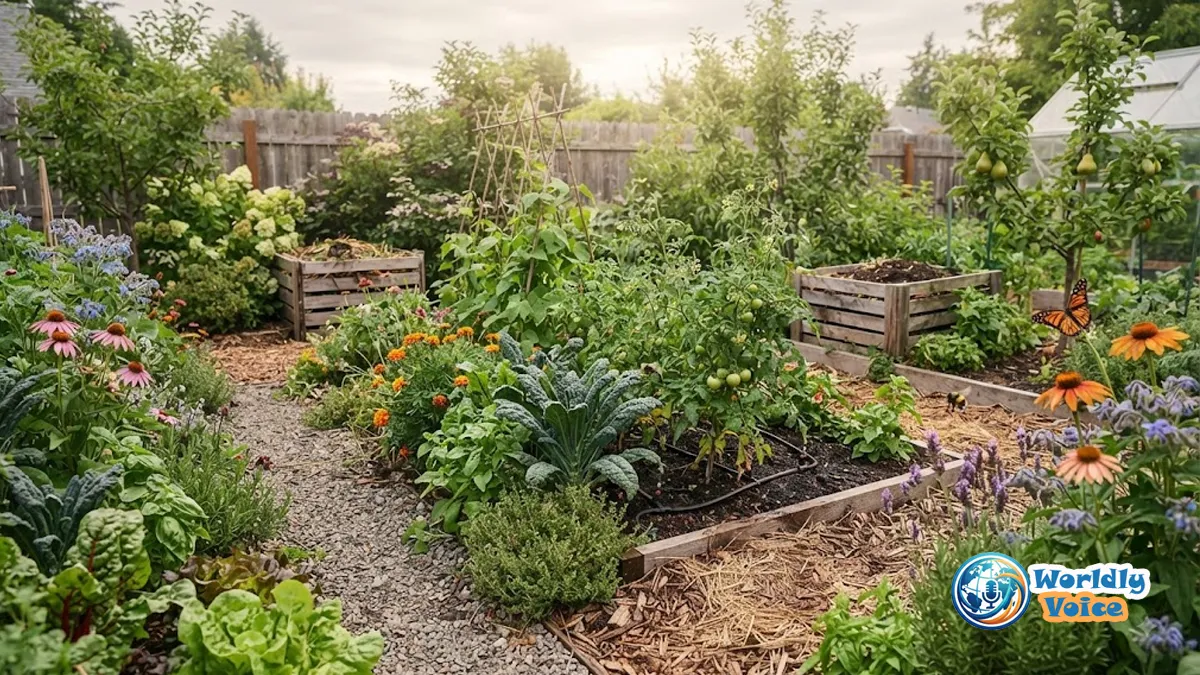
A healthy garden does not have to depend on excessive watering, synthetic fertilizers, routine pesticide spraying, or constant digging. The best practices for eco-friendly gardening focus on creating conditions in which plants, soil organisms, pollinators, and other parts of the garden ecosystem can work together naturally.
That means choosing plants suited to the local environment, improving soil with organic matter, conserving water, reducing unnecessary disturbance, managing pests carefully, and making space for biodiversity. Current sustainable-gardening guidance for 2026 also continues to emphasize no-till gardening, composting, native and climate-appropriate plants, and wildlife-friendly landscapes.
The goal is not to create a perfectly “natural” garden overnight. Instead, small changes can gradually turn an ordinary yard, vegetable patch, or container garden into a more resilient and resource-efficient growing system.
What Are the Best Practices for Eco-Friendly Gardening?
The most effective approach is to think of the garden as a connected system rather than a collection of individual plants.
Key practices include:
- Choose native or climate-appropriate plants.
- Build healthy soil with compost and organic matter.
- Minimize unnecessary soil disturbance.
- Keep soil covered with mulch or living plants.
- Water according to actual plant and soil needs.
- Use efficient irrigation where appropriate.
- Manage pests through integrated pest management (IPM).
- Protect pollinators and beneficial insects.
- Reduce unnecessary fertilizer and pesticide use.
- Compost suitable organic waste.
- Reuse garden materials when practical.
- Increase plant diversity.
- Avoid invasive species.
- Reduce resource-intensive lawn areas where suitable.
- Adapt maintenance to local climate and growing conditions.
These practices reinforce one another. Healthy soil can improve water management, diverse planting can support beneficial organisms, and appropriate plant selection can reduce the need for intensive maintenance.
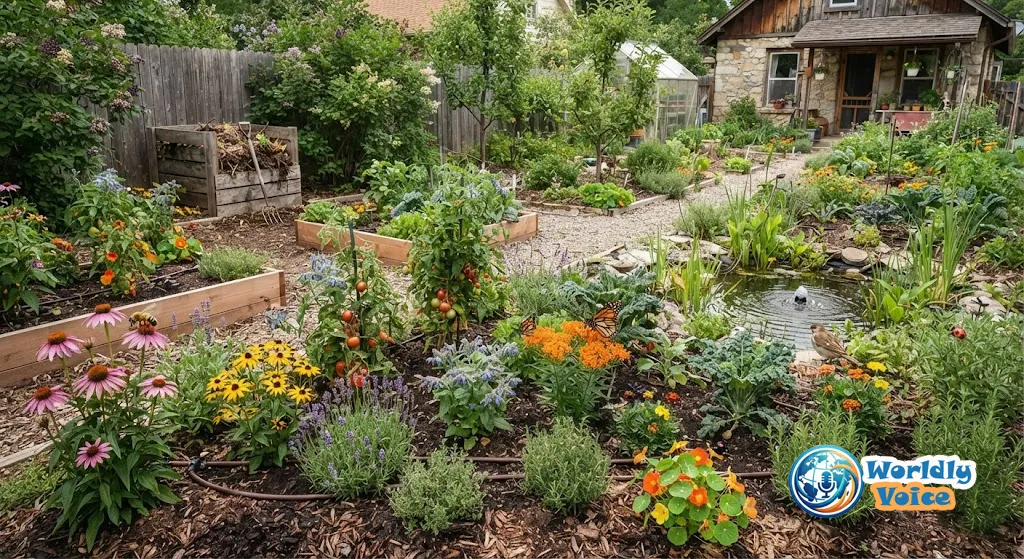
Sustainable Gardening Techniques for Beginners
You do not need expensive equipment or a complete garden redesign to begin. The easiest approach is to start with practices that solve several problems at once.
1. Choose the Right Plant for the Right Place
Before buying a plant, consider its natural requirements rather than choosing it simply because it looks attractive.
Check:
- Sunlight requirements
- Mature size
- Soil preferences
- Water needs
- Temperature tolerance
- Blooming period
- Wildlife value
- Whether it is invasive in your region
Native and climate-adapted plants can be particularly useful because they are better matched to local environmental conditions. The EPA also identifies native and climate-appropriate plants as an important consideration in greener landscaping.
A plant that naturally suits your climate is usually easier to maintain than one that requires constant irrigation, fertilizer, pruning, or protection from local conditions.
2. Increase Plant Diversity
A garden dominated by a single plant species can be more vulnerable to certain pests, diseases, or environmental stresses.
Instead, combine different layers and types of vegetation where appropriate:
- Flowers
- Herbs
- Vegetables
- Shrubs
- Trees
- Ground covers
- Native plants
Plant diversity can also provide food and shelter for pollinators, birds, and beneficial insects.
3. Disturb the Soil Less
Repeated deep digging and tilling can disrupt soil structure and organisms. Soil-health guidance from the USDA Natural Resources Conservation Service emphasizes minimizing disturbance, maximizing soil cover, maintaining living roots, and increasing biodiversity.
For an established garden bed, consider a low-disturbance approach:
- Remove problem weeds where necessary.
- Add suitable mature compost to the surface.
- Apply an appropriate mulch.
- Plant only where needed.
- Avoid repeatedly turning the entire bed.
This does not mean you can never dig. Some situations require soil preparation, planting, aeration, or removal of invasive plants. The principle is simply to avoid unnecessary disturbance.
4. Compost Suitable Organic Waste
Composting keeps suitable organic material in the nutrient cycle instead of treating it as disposable waste.
Depending on your composting system, useful materials may include:
- Vegetable and fruit scraps
- Fallen leaves
- Grass clippings
- Plant residues
- Shredded untreated paper or cardboard
Finished compost can contribute organic matter and improve soil structure and water-holding capacity.
If you are new to composting, start small. A simple compost pile, bin, or appropriate worm-composting system can be enough for a home garden.
If you want to expand this part of your garden routine, Composting Tips can be a useful next topic to explore.
Organic Pest Control Methods for Home Gardens
Eco-friendly pest management does not mean trying to eliminate every insect. Many insects are harmless, while others are valuable predators or pollinators.
The better objective is to keep damaging pests below a level where they cause unacceptable harm.
Identify the Problem Before Treating It
Seeing an insect on a plant does not automatically mean the plant needs treatment.
Before taking action, ask:
- What species is present?
- Is it actually causing damage?
- How extensive is the damage?
- Are beneficial predators already present?
- Can the plant tolerate the damage?
- Is the problem likely to resolve naturally?
This simple pause can prevent unnecessary pesticide use.
Use Integrated Pest Management
Integrated pest management, or IPM, combines monitoring, prevention, physical controls, biological controls, and carefully selected treatments when necessary.
Practical IPM methods include:
- Inspecting plants regularly
- Correctly identifying pests
- Removing pests by hand
- Using row covers or insect netting
- Maintaining healthy plants
- Encouraging beneficial insects
- Rotating vegetable crops
- Removing seriously diseased material
- Using lower-risk products only when justified
The EPA includes integrated pest management and wise pesticide use among approaches to greener landscaping.
Remember That “Natural” Does Not Mean Harmless
Insecticidal soaps, horticultural oils, neem-based products, and other organic or naturally derived treatments can still affect non-target organisms if used incorrectly.
Always follow the product label and pay attention to application timing, concentration, crop restrictions, and pollinator precautions. Avoid unnecessary spraying, particularly when flowering plants are actively being visited by pollinators.
Encourage Beneficial Insects
Lady beetles, lacewings, predatory insects, parasitoid wasps, and other organisms can help regulate pest populations.
A diverse garden with flowering plants, shelter, and reduced pesticide exposure is more likely to support these useful organisms.
Eco-Friendly Soil Management Practices
Soil is much more than a substance that holds plant roots. It is a living system containing microorganisms, organic matter, minerals, air, and water.
The USDA describes healthy soil as a living ecosystem and identifies four central management principles: maximizing living roots, minimizing disturbance, maximizing soil cover, and maximizing biodiversity.
Add Organic Matter Carefully
Mature compost and suitable organic materials can improve soil structure and contribute to moisture retention and nutrient cycling.
However, adding more material is not always better. Excess nutrients can create environmental problems. Soil testing can help determine whether amendments or fertilizer are actually needed.
Keep Soil Covered
Bare soil is more exposed to erosion, evaporation, temperature fluctuations, and weed pressure.
Depending on the garden, soil can be protected with:
- Organic mulch
- Fallen leaves
- Compost
- Straw where suitable
- Living ground covers
- Appropriate plant residues
Soil cover is one of the simplest sustainable practices because it can help conserve moisture while protecting the soil surface. USDA soil-health guidance specifically identifies soil cover as a core principle.
Test Before Adding Fertilizer
Yellow leaves or weak growth do not automatically mean a plant needs fertilizer. Problems may result from incorrect pH, poor drainage, insufficient light, root damage, pests, disease, or other factors.
A soil test can provide information about pH and nutrient levels and help prevent unnecessary fertilizer applications.
Rotate Vegetable Crops
If you grow vegetables, avoid repeatedly planting the same crop family in exactly the same location.
Crop rotation can diversify the growing system and may help reduce the buildup of certain pests and diseases. Plant diversity is also an important component of healthy soil management.
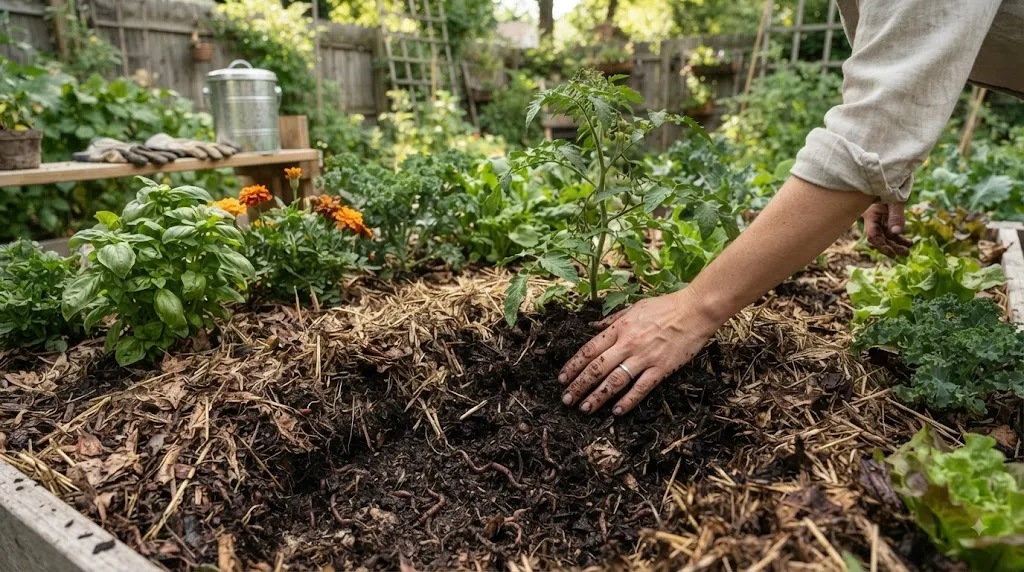
Water-Saving Gardening Tips and Ideas
Sustainable watering is not simply about using less water. The objective is to deliver enough moisture to the plant root zone while minimizing evaporation, runoff, and waste.
Water According to Conditions
Before watering, consider:
- Soil moisture
- Recent rainfall
- Temperature
- Weather forecast
- Plant species
- Plant age
- Soil type
A newly planted seedling may have very different requirements from an established drought-tolerant shrub.
Water at an Efficient Time
Early-morning watering is often practical because cooler conditions can reduce evaporation. Evening irrigation can also reduce evaporation, but keeping foliage wet overnight may increase disease risk for some plants.
The best schedule ultimately depends on the plant, soil, climate, and irrigation system.
Consider Drip Irrigation
Drip irrigation delivers water close to plant roots rather than spraying large areas unnecessarily. It can be particularly useful for:
- Vegetable beds
- Trees
- Shrubs
- Raised beds
- Container gardens
Inspect emitters regularly for leaks and blockages.
Use Mulch
Mulching is one of the easiest water-saving gardening tips and ideas for home gardeners.
A suitable organic mulch can:
- Reduce evaporation
- Moderate soil temperature
- Suppress weeds
- Protect soil from heavy rain
- Add organic matter as it decomposes
USDA soil-health guidance likewise identifies soil cover as a way to conserve moisture and protect the soil surface.
Collect Rainwater Where Appropriate
Where local rules, climate, and infrastructure allow it, rain barrels or tanks can capture water for suitable garden uses.
A basic setup may include gutters, downspouts, screens, storage, and overflow management. Stored water should be handled safely and used only for purposes appropriate to the collection system.
Select Drought-Tolerant Plants
Plant selection has a major influence on irrigation requirements. A landscape built around species suited to local rainfall and climate generally needs less supplemental water than one filled with plants requiring frequent irrigation.
Build a More Sustainable Garden Ecosystem
Sustainability extends beyond soil and watering.
Reduce Garden Waste
Reuse suitable organic material rather than automatically sending everything away:
- Compost fallen leaves.
- Use suitable leaves as mulch.
- Compost appropriate plant residues.
- Reuse healthy plant material when practical.
- Avoid unnecessary disposal of organic matter.
For households interested in reducing waste beyond gardening, How to Start a Zero-Waste Lifestyle can naturally complement these practices.
Reduce High-Maintenance Lawn Areas
Large areas of conventional lawn can require regular mowing, watering, fertilization, and maintenance.
Where appropriate, consider replacing portions with:
- Native plants
- Ground covers
- Pollinator gardens
- Shrubs
- Vegetable beds
- Trees
- Naturalized areas
The EPA’s greener-landscaping guidance also highlights water conservation, native plants, integrated pest management, and lower-impact landscaping approaches.
Choose Lower-Impact Tools
For small gardens, hand tools may be enough for many tasks. Hand pruners, rakes, hoes, hand weeders, and push mowers can reduce dependence on fuel-powered equipment.
For larger properties, electric equipment may be a practical alternative where it meets the workload.
Create a Pollinator-Friendly Garden
A sustainable garden can provide more than food and flowers for people. It can also become habitat for bees, butterflies, moths, birds, and other wildlife.
Try to:
- Plant flowers with different blooming periods.
- Include locally appropriate native plants.
- Avoid unnecessary pesticide applications.
- Provide suitable shelter.
- Include flowering shrubs and trees.
- Maintain some less-disturbed areas.
- Provide clean water where appropriate.
The University of Minnesota Extension’s 2026 sustainable-gardening guidance similarly highlights native plants, pollinator gardens, shelter, water sources, and layered plantings as ways to create more wildlife-friendly landscapes.
Sustainable Gardening Mistakes to Avoid
Even well-intentioned gardeners can make choices that increase resource use.
Overwatering
More water does not automatically produce healthier plants. Excessive irrigation can waste water, contribute to nutrient movement through soil, and create conditions that encourage root or disease problems.
Overfertilizing
Applying fertilizer without knowing what the soil and plants actually need can waste money and resources. Follow soil-test recommendations and plant requirements where available.
Routine Pesticide Spraying
Do not spray simply because insects are present. Identify the pest and determine whether intervention is actually necessary.
Leaving Soil Bare
Uncovered soil is more exposed to evaporation, erosion, weeds, and temperature extremes. Mulch or living cover can often provide a better alternative.
Planting Invasive Species
A plant that looks attractive in a garden can cause ecological problems if it spreads into natural habitats. Check local invasive-species information before introducing unfamiliar plants.
A Simple Eco-Friendly Gardening Routine
Sustainable gardening becomes easier when it is treated as a routine rather than a collection of occasional projects.
| Frequency | Practical tasks |
|---|---|
| Weekly | Inspect plants, check soil moisture, look for pests and beneficial insects, remove emerging weeds, check irrigation |
| Monthly | Inspect mulch, review plant health, maintain tools, compost suitable waste, check irrigation efficiency |
| Seasonally | Rotate crops, reassess water needs, add suitable organic matter, select climate-appropriate plants, review pollinator habitat |
The key is observation. Instead of automatically watering, fertilizing, spraying, or digging, look at what the garden is actually telling you.
FAQs About Eco-Friendly Gardening
What is the most important eco-friendly gardening practice?
There is no single practice that works for every garden. A strong starting point is choosing plants suited to the local environment and building healthy, covered soil. These decisions can reduce water, fertilizer, and maintenance requirements over time.
Is organic gardening always environmentally friendly?
Not automatically. Organic products can still have environmental effects if they are overused or misapplied. Sustainable gardening is broader than avoiding synthetic chemicals; it also includes water conservation, biodiversity, soil health, waste reduction, and appropriate plant selection.
How can beginners make a garden more sustainable?
Start with a few manageable changes: choose appropriate plants, mulch exposed soil, compost suitable organic waste, avoid unnecessary pesticide applications, and check soil moisture before watering.
Does eco-friendly gardening mean never using pesticides?
No. The emphasis is on prevention and targeted management. Integrated pest management can use physical, cultural, biological, and chemical controls when appropriate, with pesticides reserved for situations where they are actually needed.
How does mulch help an eco-friendly garden?
Mulch protects the soil surface, reduces evaporation, suppresses some weeds, moderates soil temperature, and can contribute organic matter when suitable organic materials decompose.
Conclusion
The best practices for eco-friendly gardening are less about following a strict set of rules and more about creating a garden that works with local environmental conditions.
Choose plants carefully. Protect and improve the soil. Keep soil covered. Minimize unnecessary disturbance. Water according to actual needs. Use integrated pest management instead of routine spraying. Compost suitable organic waste and create space for pollinators and beneficial wildlife.
For beginners, sustainable gardening techniques for beginners can be as simple as adding mulch, choosing climate-appropriate plants, composting, and observing before taking action. Likewise, organic pest control methods for home gardens work best when they emphasize identification, prevention, physical controls, and beneficial organisms rather than automatic spraying.
Healthy soil, efficient water use, diverse planting, and thoughtful pest management reinforce one another. The result is not only a garden that uses fewer unnecessary resources, but one that is better equipped to handle changing conditions.
You do not need to transform everything at once. Start with one bed, one watering habit, or one soil-management improvement, then build from there.
