


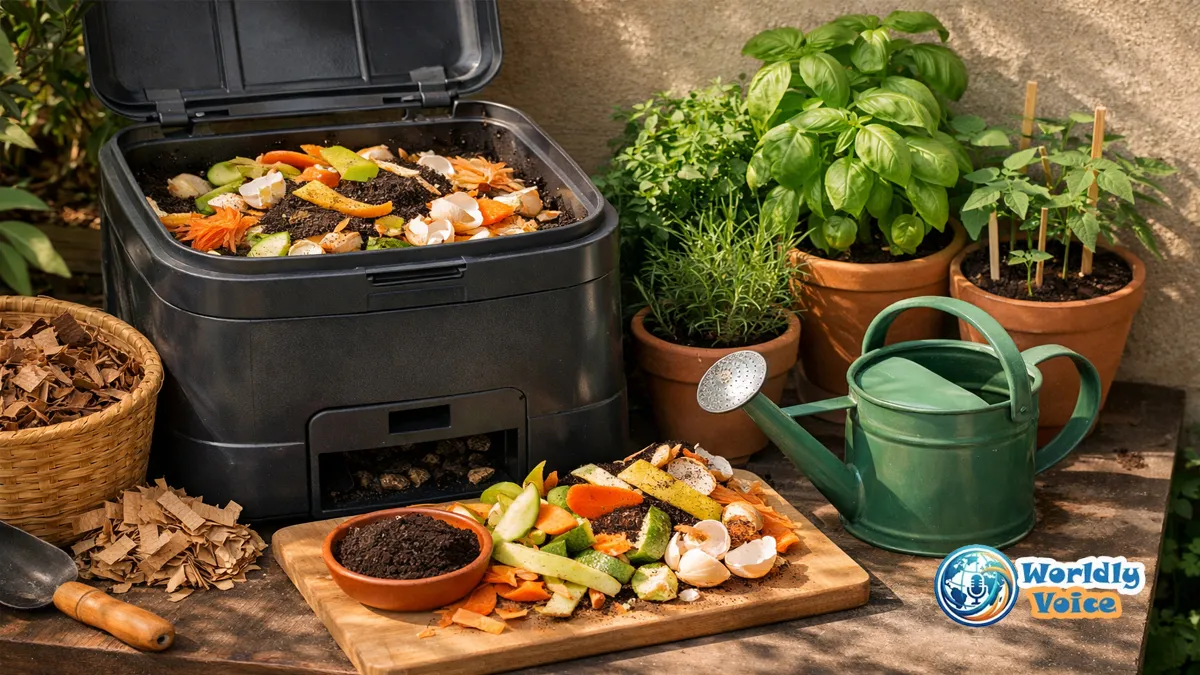
If you have ever looked at a bowl of vegetable peels and wondered whether they could become something useful, these Beginner composting tips will help you start without stress. I began composting with a small kitchen container, a few dry leaves, and plenty of questions. Would it smell? Would it attract pests? Would I do it wrong? In my experience, composting becomes simple once you understand three things: balance, moisture, and air.
Composting is the natural recycling of organic matter. Food scraps, leaves, grass clippings, and paper break down into dark, crumbly material that improves soil. Gardeners often call it “black gold” because it supports soil nutrient enrichment, boosts microbial activity in compost, and reduces household waste.
If you are searching for How to start a compost bin at home, the answer is not complicated. You do not need a farm, expensive tools, or perfect weather. A balcony, courtyard, backyard corner, or even an indoor worm bin can work.
I have tested composting in both outdoor spaces and compact containers. The biggest lesson? Composting rewards observation more than perfection. When something smells off, dries out, or slows down, the pile is simply telling you what it needs.
For readers who enjoy practical sustainability content alongside topics like Tech Education Trends or urban infrastructure guides such as Facilities at Chongqing East Railway Station, composting offers a grounded, daily way to reduce waste and reconnect with natural systems.
1. Beginner Composting Tips Start With the Right Setup
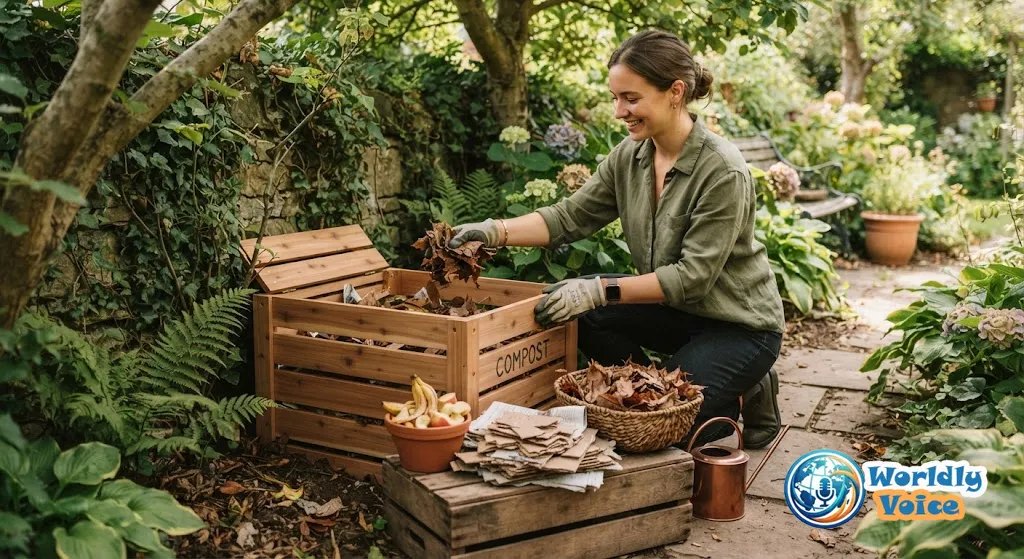
The first decision is location. A compost pile or bin works best where it has drainage, some airflow, and easy access. If you are using a backyard bin, place it on bare soil if possible. This lets worms, fungi, and beneficial microbes move in naturally.
In hot climates such as Hyderabad, I prefer morning sun and afternoon shade. Direct heat all day can dry the pile quickly. Too much shade, however, may slow decomposition during cooler months.
For backyard composting methods, you can choose from:
- An open compost pile
- A closed plastic compost bin
- A wooden slatted bin
- A tumbler compost bin
- A worm composting system
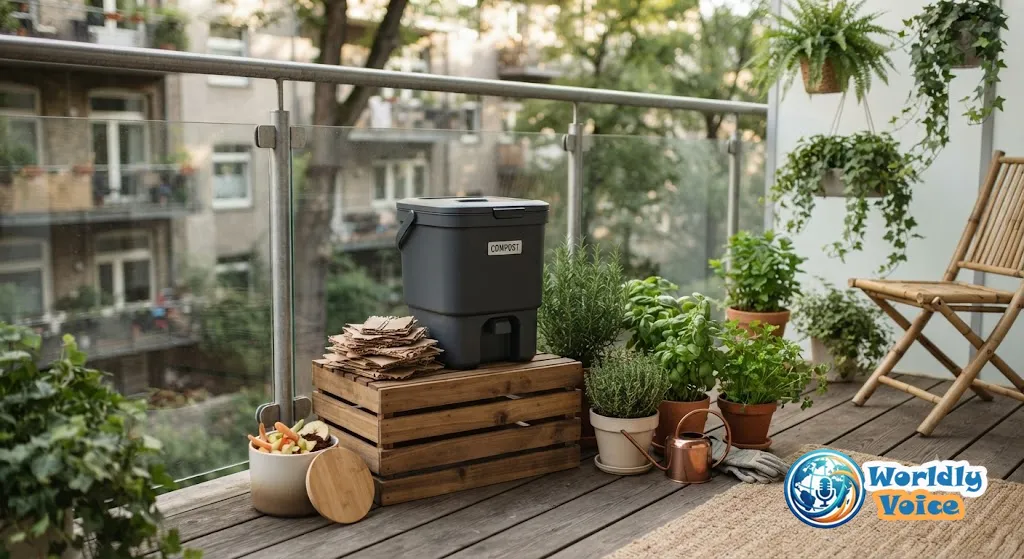
- A compact balcony bin
If you want official guidance on How to start a compost bin at home, the U.S. Environmental Protection Agency has a clear overview of home composting basics.
What Size Compost Bin Do You Need?
For a family kitchen, a bin between 60 and 200 liters is usually enough. If you have a garden, a larger bin helps build heat and speed up aerobic decomposition. If you live in an apartment, choose a sealed compact bin or a vermicomposting setup.
I noticed that beginners often buy a bin that is too large, then feel discouraged when it stays half empty. Start small. Build the habit first.
A Simple Beginner Setup
Here is a basic starter system:
- One kitchen scrap container with a lid
- One outdoor compost bin or bucket with holes
- A bag of dry leaves, shredded cardboard, or cocopeat
- A small garden fork or compost aerator
- Water spray bottle or watering can
Keep dry browns nearby. This one habit prevents most composting problems.
2. Understand Greens and Browns Before Adding Scraps
The most important composting principle is the carbon-to-nitrogen ratio. In plain English, this means balancing “browns” and “greens.”
Greens are nitrogen-rich materials. They are usually moist and fresh. Browns are carbon-rich materials. They are usually dry and fibrous.
Most studies and university extension services agree that compost works best when carbon and nitrogen are balanced. You do not need to calculate exact numbers at home. A practical rule is:
Use 2–3 parts browns for every 1 part greens.
Compost Greens vs Browns Table
| Compost Material | Type | Examples | Composting Note |
|---|---|---|---|
| Fruit peels | Green | Banana, apple fruit peels, citrus in small amounts | Chop large pieces for faster breakdown |
| Vegetable scraps | Green | Carrot tops, onion skins, cucumber peels | Excellent daily compost material |
| Coffee grounds | Green | Used grounds and paper filters | Adds nitrogen and texture |
| Dry leaves | Brown | Fallen garden leaves | One of the best compost browns |
| Shredded cardboard | Brown | Plain boxes, toilet roll tubes | Avoid glossy or plastic-coated cardboard |
| Straw | Brown | Dry straw, hay in small amounts | Adds airflow |
| Grass clippings | Green | Fresh lawn cuttings | Add thin layers to avoid slime |
| Eggshells | Mineral-rich | Crushed eggshells | Slow to break down but adds calcium |
This balance supports microbial activity in compost. Microbes are the tiny organisms doing the real work. They eat, multiply, release heat, and transform waste into stable organic matter.
When I first started, I added too many kitchen scraps and not enough dry material. The bin became wet and sour. Once I added shredded cardboard and turned it twice, the smell disappeared within a few days.
That is the rhythm of composting. Observe. Adjust. Continue.
3. Best Kitchen Scraps for Composting
One of the easiest ways to begin organic matter recycling is to collect daily food scraps. The Best kitchen scraps for composting are plant-based, small, and easy for microbes to break down.
Use these regularly:
- Fruit and vegetable peels
- Coffee grounds and paper filters
- Crushed eggshells
- Tea leaves and plastic-free tea bags
- Stale bread in small amounts
- Cooked plain rice or grains in very small amounts
- Herb stems and wilted greens
Avoid these in a beginner compost bin:
- Meat
- Fish
- Dairy
- Oils and greasy food
- Pet waste
- Diseased plants
- Glossy paper
- Plastic-coated tea bags
- Large branches
The reason is practical. Meat, dairy, and oils can attract rats, flies, and neighborhood animals. They also create odor when they break down without enough oxygen.
For more material guidance, the University of Minnesota Extension provides a useful resource on Best kitchen scraps for composting and compost ingredients.
Should You Add Citrus, Onion, or Garlic?
Yes, but in moderation. Citrus peels, onion skins, and garlic scraps break down slowly and can be strong-smelling in small bins. I add them in chopped pieces and always cover them with browns.
Should You Chop Scraps?
Yes. Smaller pieces decompose faster. I keep kitchen scraps roughly thumb-sized. A whole watermelon rind may take weeks. Chopped rind breaks down much faster.
A small habit helps: before emptying scraps into the bin, use kitchen scissors to cut larger peels. It takes less than a minute.
4. Composting for Small Spaces
Composting for small spaces is more realistic than many people think. You do not need a garden. You need a controlled system.
I have used a compact balcony bin with dry leaves stored in a sack nearby. The trick was to keep scraps buried under browns. No exposed food means fewer flies and less odor.
Good options include:
Compact Balcony Bin
A sealed bin with drainage and air holes works well on balconies or patios. Add scraps, cover with browns, and turn regularly.
Best for:
- Small households
- Balcony gardens
- Courtyards
- Urban homes
Worm Composting
Worm composting, also called vermicomposting, uses red wigglers to process food scraps into nutrient-rich castings. These castings are excellent for potted plants.
If you are new to this method, Cornell Waste Management Institute offers a helpful guide to Vermicomposting basics.
Best for:
- Apartments
- Kitchen gardens
- Indoor plant lovers
- Small-space gardeners
Keep worm bins away from extreme heat. In cities like Hyderabad, place them in shade and avoid metal containers that overheat.
Freezer Scrap Storage
If you cannot empty scraps daily, store them in the freezer. This prevents odor and fruit flies indoors.
I use this method when traveling or during busy weeks. Frozen scraps soften after thawing, which can actually help them break down faster.
5. How Moisture and Air Control the Whole Process
Compost should feel like a wrung-out sponge. Damp, but not dripping.
This simple comparison is one of the best Beginner composting tips I share with anyone starting out. Moisture helps microbes move and feed. Too little water stalls decomposition. Too much water blocks oxygen and creates anaerobic smells.
Aerobic decomposition means breakdown with oxygen. It is the clean, earthy-smelling process you want. Anaerobic decomposition happens without enough oxygen and often smells sour or rotten.
How to Check Moisture
Take a handful of compost and squeeze it.
- If it crumbles and feels dusty, it is too dry.
- If a few drops appear, it is about right.
- If water streams out, it is too wet.
How Often Should You Turn Compost?
For beginners, turning once a week is enough. Use a fork, shovel, or compost aerator. Turning adds oxygen and mixes greens with browns.
If you want faster compost, turn every 3–4 days. If you prefer low-effort composting, turn every two weeks and be patient.
I noticed that my compost smelled best when I turned it after each big food scrap addition. It did not need heavy mixing. Just enough movement to break dense layers.
6. Troubleshooting Common Composting Mistakes
Even careful composters run into problems. That does not mean the bin has failed. Compost is a living system. It changes with weather, ingredients, and moisture.
Here is a practical guide to Troubleshooting common composting mistakes.
| Problem | Likely Cause | Simple Fix |
|---|---|---|
| Bad smell | Too many greens or poor airflow | Add dry browns and turn the pile |
| Fruit flies | Food scraps exposed | Bury scraps under leaves or cardboard |
| Pests | Meat, dairy, or exposed food | Remove problem items and seal bin |
| Pile too dry | Heat, sun, or too many browns | Sprinkle water and mix |
| Pile too wet | Rain or too many food scraps | Add cardboard, dry leaves, or straw |
| Compost not heating | Pile too small or poor mix | Add volume and balance greens/browns |
| Slimy texture | Excess greens | Add structured browns and aerate |
| Slow breakdown | Large pieces or cold conditions | Chop scraps and turn more often |
Why Does Compost Smell Bad?
Bad odor usually means the pile lacks oxygen or has too much nitrogen-rich food waste. Add browns. Turn it. Keep food covered.
Why Are There Flies?
Fruit flies appear when scraps sit exposed. I solved this by keeping a thick “blanket” of dry leaves on top of the bin. Every time I added food scraps, I covered them completely.
Why Is Nothing Happening?
The pile may be too dry, too small, or too carbon-heavy. Add greens, sprinkle water, and turn. Decomposition often restarts within days.
7. A Simple Weekly Compost Routine
A routine makes composting feel easy. Here is the one I recommend.
Daily
- Collect fruit and vegetable scraps.
- Keep scraps covered indoors.
- Chop larger pieces when convenient.
Two or Three Times a Week
- Add scraps to the bin.
- Cover with browns.
- Check for odor or flies.
Weekly
- Turn the compost.
- Check moisture.
- Add water or dry material as needed.
Monthly
- Look for finished compost at the bottom.
- Sift out large pieces if needed.
- Use mature compost around plants.
Finished compost is dark, crumbly, and earthy. It should not smell like rotting food. If you still recognize many scraps, let it continue breaking down.
8. How to Use Finished Compost in the Garden
Finished compost improves soil structure and supports soil nutrient enrichment. It helps sandy soil hold water and clay soil loosen up. It also feeds beneficial soil life.
Use compost in these ways:
- Mix into potting soil for container plants
- Add a thin layer around vegetables
- Use as mulch around trees
- Blend into raised beds
- Top-dress indoor plants lightly
- Add to seed-starting mixes only when fully mature
Do not plant directly into pure compost. It can be too rich or dense. Mix it with soil, cocopeat, or other growing media.
In my garden pots, I use one part compost to three parts soil mix. Herbs like basil, mint, and coriander respond well. The leaves look healthier, and the soil stays moist longer.
This is where composting feels rewarding. Yesterday’s peels become tomorrow’s plant food.
9. Composting in Hot Climates Like Hyderabad
Heat speeds decomposition, but it also dries the pile. In Hyderabad’s hot months, I recommend shade, moisture checks, and extra browns.
Use these local climate tips:
- Keep bins in morning sun and afternoon shade.
- Add water lightly during dry weeks.
- Avoid black plastic bins in harsh direct sun.
- Use cocopeat or dry leaves to retain moisture.
- Keep worm bins indoors or in deep shade.
- Cover outdoor piles during heavy rain.
A compost pile in hot weather can go from balanced to bone dry quickly. I learned to check moisture every few days in summer. A small sprinkle of water often keeps microbial life active.
If you live in a small apartment, Composting for small spaces may be easier indoors or in a shaded service balcony. Worm bins and compact containers are better than open piles in dense urban areas.
10. Composting Safety and Trustworthy Consensus
Most agricultural extensions, environmental agencies, and composting educators agree on the same fundamentals:
- Balance greens and browns.
- Maintain moisture.
- Add oxygen.
- Avoid meat, dairy, oils, and pet waste in beginner systems.
- Use finished compost only when it smells earthy and looks stable.
Organizations such as the U.S. Environmental Protection Agency, Cornell University, and university extension services consistently explain composting as a safe, science-backed form of organic matter recycling when done properly.
Named entities worth understanding include:
- U.S. Environmental Protection Agency (EPA): Offers home composting and waste reduction guidance.
- Cornell Waste Management Institute: Known for composting and vermicomposting education.
- University of Minnesota Extension: Provides research-based gardening and compost advice.
- Hyderabad, India: A hot-climate urban setting where shade and moisture control matter.
This consensus builds trust. Composting is not a trend. It is a practical, well-studied way to return nutrients to soil.
FAQs About Beginner Composting Tips
1. How long does compost take to finish?
Most home compost takes two to six months. Hot, balanced piles break down faster. Cool, dry, or poorly mixed piles take longer.
2. Can I compost in an apartment?
Yes. Composting for small spaces works with compact bins, bokashi buckets, or worm composting. Keep scraps covered and add enough browns to control odor.
3. What is the best beginner compost ratio?
Use 2–3 parts browns to 1 part greens. This supports a healthy carbon-to-nitrogen ratio without needing exact measurements.
4. Are eggshells good for compost?
Yes. Crush them first. Eggshells break down slowly but add calcium and improve mineral content over time.
5. Why is my compost not heating up?
It may be too small, too dry, or lacking nitrogen. Add greens, check moisture, and turn the pile. This is a common part of Troubleshooting common composting mistakes.
6. Can composting connect with other sustainability topics?
Yes. Composting fits naturally with urban gardening, waste reduction, climate education, and even broader learning themes like Tech Education Trends and city-living resources such as Facilities at Chongqing East Railway Station.
Conclusion: Start Small, Observe Often, Keep Going
The best compost system is the one you will actually maintain. Start with a small bin. Add fruit peels, vegetable scraps, coffee grounds, and eggshells. Cover them with dry leaves or shredded cardboard. Keep the pile damp like a wrung-out sponge. Turn it weekly.
These Beginner composting tips are not about perfection. They are about learning the language of your compost. A smell means add browns and air. Dryness means add water. Flies mean cover scraps. Slow breakdown means adjust the mix.
If you are learning How to start a compost bin at home, begin today with one container and one handful of dry leaves. In a few months, you may be feeding your plants with compost made from scraps you once threw away.
That is a quiet but meaningful shift. Less waste in the bin. More life in the soil. And one more practical habit that supports a healthier home environment, whether you are exploring gardening, Tech Education Trends, or sustainable city living through guides like Facilities at Chongqing East Railway Station.
References
- U.S. Environmental Protection Agency — How to start a compost bin at home
- Cornell Waste Management Institute — Vermicomposting basics
- University of Minnesota Extension — Best kitchen scraps for composting
