


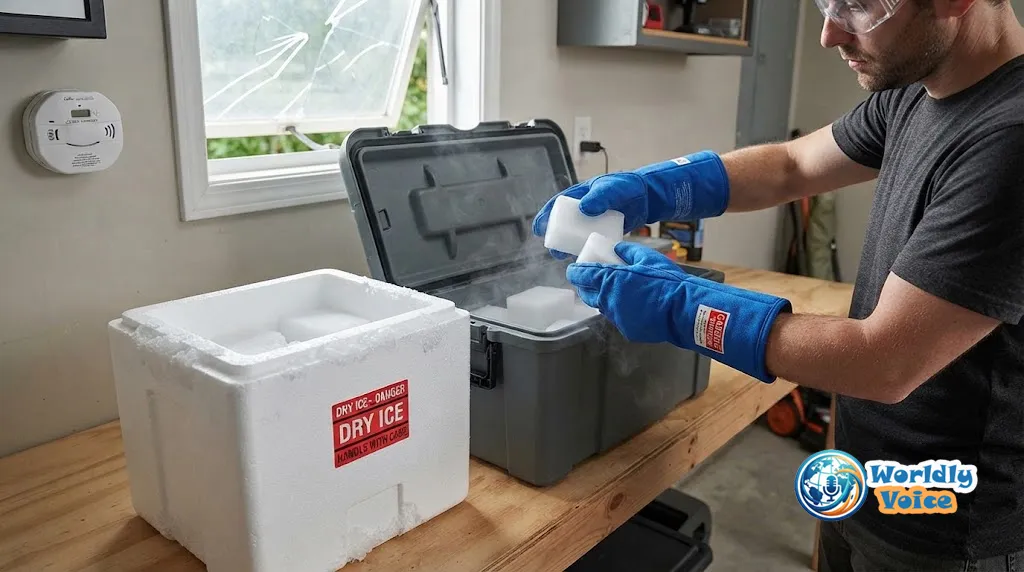
Dry ice can be extremely useful for keeping food or other items cold, but it requires different care from ordinary ice. How to store dry ice safely comes down to three essential rules: use an insulated container that allows gas to escape, keep it in a well-ventilated area, and never seal it inside an airtight container.
Dry ice is solid carbon dioxide (CO₂), and it does not melt into a puddle. Instead, it changes directly from a solid into gas through sublimation. That makes storage a matter of more than simply keeping it cold. The extremely low temperature can cause serious cold injuries, while released carbon dioxide can create pressure or breathing hazards in enclosed spaces.
This guide explains where to keep dry ice, which containers are suitable, how long it may last, and the safest way to handle and dispose of what remains.
What Is Dry Ice, and Why Does Proper Storage Matter?
Dry ice is the solid form of carbon dioxide. Its surface temperature is approximately −78.5°C (−109°F), which is cold enough to rapidly injure exposed skin and eye tissue.
The main difference between dry ice and ordinary ice is what happens as it warms.
Ordinary ice melts into liquid water. Dry ice undergoes the dry ice sublimation process, turning directly into carbon dioxide gas.
That creates three important storage concerns:
- Extreme cold: Bare-skin contact can cause severe cold injury or frostbite.
- Gas buildup: Carbon dioxide can accumulate in poorly ventilated areas.
- Pressure buildup: A sealed container can become pressurized as the dry ice turns into gas and may rupture.
Think of insulation and ventilation as two sides of the same safety requirement. You want insulation to slow the disappearance of the dry ice, but you must still allow the resulting gas to escape safely.
How to Store Dry Ice Safely
For most household situations, the safest general approach is straightforward: place dry ice in a compatible insulated container that is not airtight, then keep that container in a secure, well-ventilated location.
A practical setup should provide:
- Insulation to slow sublimation.
- A safe path for carbon dioxide gas to escape.
- Adequate surrounding ventilation.
- Protection from heat and direct sunlight.
- Restricted access for children and pets.
A vented cooler or suitable insulated Styrofoam container may be used for temporary storage when appropriate. The critical point is that the container must not become airtight.
A simple dry ice storage checklist
Before leaving dry ice anywhere, ask:
- Is the container insulated?
- Can carbon dioxide gas escape?
- Is the area well ventilated?
- Is the container protected from accidental tipping or interference?
- Is it away from children and pets?
- Is it outside an enclosed appliance or confined space?
If the answer to any of these questions is no, reconsider the storage location.
Best Container for Storing Dry Ice at Home
The best container for storing dry ice at home is generally a compatible insulated container designed or suitable for dry ice that allows carbon dioxide gas to vent.
Suitable temporary options may include:
- A purpose-designed dry ice storage container
- A compatible insulated cooler that is not airtight and can safely vent
- A suitable insulated Styrofoam shipping container for temporary storage
Cornell’s environmental health and safety guidance recommends a compatible insulated container that allows gas to escape and warns against containers that may become airtight.
Containers to avoid
Never place dry ice in:
- Glass jars
- Sealed food containers
- Screw-top bottles
- Thermos bottles
- Airtight plastic containers
- Fully sealed containers that cannot vent gas
As dry ice sublimates, the expanding carbon dioxide gas needs somewhere to go. Trapping it inside a sealed container can create dangerous pressure.
Quick container comparison
| Container type | Suitable for dry ice? | Why |
|---|---|---|
| Compatible vented insulated cooler | Generally suitable | Provides insulation while allowing gas to escape |
| Purpose-designed dry ice container | Suitable | Designed for the temperature and venting requirements |
| Suitable Styrofoam container | Temporary use | Insulating and generally not airtight |
| Glass jar | No | Can become brittle, crack, or rupture |
| Screw-top container | No | Can trap expanding gas |
| Airtight thermos | No | Pressure can build inside |
Always follow the manufacturer’s instructions for a specific cooler or container rather than assuming every insulated box is suitable.
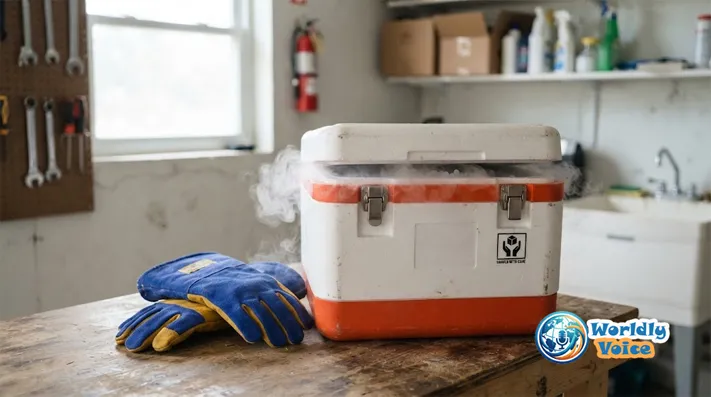
Where Should You Store Dry Ice?
A cool, secure, well-ventilated area is generally the safest choice for temporary dry ice storage.
Avoid placing the container in a cramped, enclosed location where carbon dioxide could accumulate.
Avoid confined or poorly ventilated spaces
Examples include:
- Small unventilated closets
- Cold rooms without suitable ventilation
- Enclosed storage areas
- Occupied passenger compartments of vehicles
- Other confined spaces
Carbon dioxide is colorless and odorless, so you cannot rely on smell to tell you that a concentration is becoming dangerous. High concentrations can cause symptoms including headache, dizziness, confusion, shortness of breath, loss of consciousness, and death.
Can you put dry ice in the freezer?
In general, do not store dry ice in a household refrigerator or freezer for long-term storage.
Dry ice is much colder than normal household freezer temperatures. Safety guidance also warns that carbon dioxide can accumulate inside enclosed appliances, while the extreme cold may damage thermostats or other components.
That does not mean dry ice is never used around refrigerated food during emergencies. Specific emergency food-preservation situations can involve dry ice, but those uses should follow applicable official guidance for the particular situation.
For ordinary storage, choose a properly ventilated location instead.
How Long Does Dry Ice Last in a Cooler?
The answer to how long does dry ice last in a cooler is not fixed because dry ice is continuously sublimating.
Its lifespan depends on:
- The amount of dry ice
- Whether it is in pellet, slice, or block form
- The quality and thickness of the insulation
- Ambient temperature
- How frequently the cooler is opened
- The amount of empty space
- The overall design of the container
Some institutional guidance provides typical sublimation estimates under particular storage conditions, but these should not be treated as a guarantee for every household cooler. A larger, well-insulated container used in a cool environment may preserve dry ice longer than a thin container repeatedly opened in hot weather.
How to keep dry ice from disappearing quickly
You cannot completely stop sublimation, but you can slow it:
- Use a high-quality insulated container.
- Keep it away from direct sunlight.
- Store it in the coolest safely ventilated location available.
- Avoid repeatedly opening the container.
- Buy dry ice as close as possible to the time you need it.
- Keep the lid appropriately closed without creating an airtight seal.
One mistake to avoid is trying to make dry ice last longer by sealing the container. That may reduce airflow, but it also creates a pressure hazard.
Dry Ice Safety Rules and Ventilation Tips
The most overlooked part of dry ice storage is often the gas rather than the cold.
As dry ice warms, it releases carbon dioxide. In a sufficiently enclosed area, that gas can accumulate and create a dangerous atmosphere.
Keep the storage area ventilated
Use dry ice only in areas with adequate airflow for the quantity involved. Larger quantities require more careful assessment of the space and ventilation.
If you are dealing with substantial amounts of dry ice, commercial storage, or a location where ventilation is uncertain, professional safety guidance may be necessary.
Do not lean into the container unnecessarily
Carbon dioxide released from dry ice may collect around the container opening, particularly with larger quantities. Open the container only when necessary and avoid placing your face directly over it.
Secure the container
Keep it upright and somewhere it will not easily be knocked over, moved, or mistaken for ordinary waste.
This is also a useful general principle for household storage: clearly separating hazardous materials from ordinary food or household containers reduces the risk of accidental misuse. Readers interested in broader home and everyday technology topics can also browse WorldlyVoice’s practical guides, although dry ice safety should always rely on dedicated safety guidance.
Watch for warning signs of exposure
If someone in an area containing dry ice develops sudden dizziness, confusion, severe shortness of breath, or loses consciousness, move away from the suspected hazardous atmosphere if it is safe to do so and seek emergency assistance.
Do not enter a confined space to attempt a rescue unless you are trained and properly equipped.
How to Handle Dry Ice Safely
Knowing how to handle dry ice safely is just as important as knowing where to store it.
Never touch dry ice with bare hands
Use appropriate protection against extreme cold. Authoritative safety guidance recommends insulated gloves suitable for very low temperatures and appropriate eye protection. Tongs or a scoop can help move pieces without direct contact.
Useful precautions include:
- Loose-fitting insulated gloves appropriate for extreme cold
- Safety glasses when handling or breaking material
- Tongs for blocks
- A scoop for pellets
- Long clothing and closed-toe shoes for larger quantities
Ordinary thin disposable gloves should not be assumed to provide adequate protection from dry ice.
Keep children and pets away
Dry ice can look unusual and interesting, especially when it creates fog effects in water. That does not make it safe to touch or ingest.
Store it where children and animals cannot access it, and never leave it unattended in an uncontrolled public or shared area.
Protect surfaces
Dry ice can damage certain materials because of its extreme temperature. Avoid placing it directly on surfaces that could crack or be damaged. Use an appropriate insulating barrier when necessary.

Can You Transport Dry Ice in a Car?
Dry ice should not be kept for extended periods in an occupied, enclosed passenger compartment.
The same process that makes storage risky in confined rooms can create a problem inside a vehicle: dry ice continuously releases carbon dioxide gas.
For small household quantities, minimize transportation time, use an appropriate non-airtight insulated container, and ensure suitable ventilation. Institutional safety guidance recommends using a separated, ventilated cargo area when possible rather than the occupied passenger compartment.
Basic transportation precautions
- Pick up dry ice as close as possible to when you need it.
- Keep the journey short.
- Use a suitable insulated container that allows gas to escape.
- Do not leave dry ice inside a parked enclosed vehicle.
- Follow relevant transport regulations for larger or commercial quantities.
Shipping dry ice is a separate matter and may involve specific hazardous-material packaging and labeling requirements.
How to Dispose of Dry Ice Safely
The safest answer to how to dispose of dry ice safely is usually to allow the remaining dry ice to sublimate naturally in a secure, well-ventilated location where carbon dioxide cannot accumulate dangerously.
The process requires patience rather than an attempt to speed disposal through unsafe methods.
Safe disposal steps
- Leave the remaining dry ice in a compatible container that allows gas to escape.
- Move it to a secure, appropriately ventilated location.
- Prevent children, pets, and other people from touching or moving the container.
- Allow the dry ice to disappear naturally through sublimation.
- Do not leave it in an occupied or uncontrolled enclosed space.
Cornell and CDC guidance both advise against placing dry ice in ordinary waste containers or plumbing and recommend allowing it to sublimate safely in a ventilated environment.
Never dispose of dry ice by:
- Throwing it into a trash can
- Placing it in a closed dumpster
- Flushing it down a toilet
- Putting it into a sink
- Pouring it into a drain
- Sealing it inside a container
The extreme cold can damage plumbing, while gas accumulation or pressure can create additional hazards.
Common Mistakes to Avoid When Storing Dry Ice
A few mistakes account for many avoidable dry ice hazards.
Sealing it inside a container
This is one of the most serious mistakes. Sublimation produces gas, and trapped gas creates pressure.
Treating a household freezer as a storage solution
Dry ice is far colder than the temperatures household appliances are designed to maintain. Carbon dioxide accumulation and equipment damage are additional concerns.
Handling it with bare hands
The injury can happen quickly. Use suitable insulated protection and tools.
Leaving it in an enclosed vehicle
A vehicle can become a confined space for accumulating carbon dioxide, particularly if it remains parked.
Throwing leftovers into ordinary trash
A closed waste container can trap the gas and create an uncontrolled hazard.
Trying to speed up disposal in plumbing
Sinks, toilets, and drains are not safe disposal systems for dry ice.
Frequently Asked Questions
Can dry ice be stored in a regular cooler?
A compatible insulated cooler may be suitable for temporary storage if it allows carbon dioxide gas to escape and does not become airtight. Check the cooler manufacturer’s guidance rather than assuming every cooler is appropriate.
Should dry ice be kept in a freezer?
Generally, no. Safety guidance advises against storing dry ice in household refrigerators and freezers because of its extremely low temperature and the risk of carbon dioxide accumulation in enclosed appliances.
How long can you keep dry ice?
There is no universal answer. The amount, form, insulation quality, ambient temperature, and how often the container is opened all affect how quickly dry ice sublimates.
Can dry ice explode?
Dry ice itself is not explosive in the ordinary sense, but the carbon dioxide gas produced during sublimation can build dangerous pressure inside a sealed container, causing it to rupture violently.
Is it safe to keep dry ice indoors?
Small quantities may be handled indoors when there is adequate ventilation and the storage arrangement is appropriate. Dry ice should not be kept in poorly ventilated or confined spaces where carbon dioxide can accumulate.
What is the safe way to get rid of dry ice?
Allow it to sublimate naturally in a secure, well-ventilated location where the gas cannot accumulate dangerously. Do not put it into trash containers, sinks, drains, or toilets.
Final Thoughts
Learning how to store dry ice safely is largely about respecting the way the material behaves. Dry ice needs insulation because it continuously sublimates, but that same process means the resulting carbon dioxide gas must have a safe way to escape.
For most home situations, remember three rules:
Use a compatible insulated container that is not airtight. Keep it in a well-ventilated location. Never handle or dispose of it casually.
Buy dry ice close to the time you plan to use it, avoid storing more than necessary, and let any unused material sublimate naturally in an appropriate location. Those simple precautions address the biggest risks: extreme cold, pressure buildup, and dangerous carbon dioxide accumulation.
