


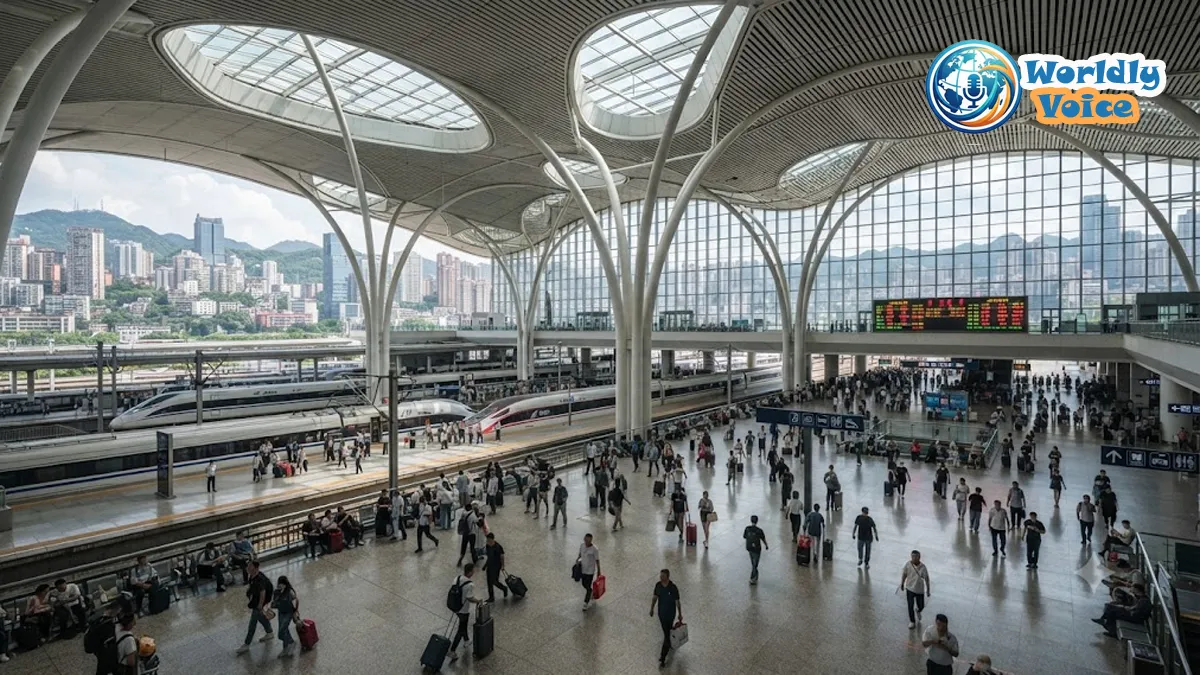
If you are planning a train trip through western China in 2026, understanding the Facilities at Chongqing East Railway Station can save you time, stress, and a surprising number of steps. For travelers arriving at Chongqing East Railway Station, understanding its layout and facilities can make the experience much easier. My takeaway? It is huge, smart, and well connected, but you will enjoy it much more if you understand the layout before you arrive.
Opened in June 2025, Chongqing East Railway Station has quickly become one of the headline projects in China’s expanding rail system. It is frequently described as the world’s largest railway station by built area, covering about 1.22 million square meters. That is roughly the size of 170 football fields. It is also a key node in the Chongqing high-speed rail network, designed to connect passengers with metro lines, buses, taxis, airport services, and long-distance rail.
In this guide, I will walk you through the station like a traveler would experience it: where to enter, how to read the Chongqing East Station terminal map, where to eat, how transfers work, and what accessibility services are available.
1. Why Chongqing East Railway Station Matters in 2026
Chongqing is not an easy city to build in. It rises and drops across hills, rivers, bridges, tunnels, and layered roads. Chongqing East Railway Station is designed as a large integrated transport hub, combining high-speed rail with multiple local transportation options.
The station was built as a major high-speed rail gateway for southwest China. It supports both regional movement and long-distance travel, helping passengers connect between Chongqing, Chengdu, Guiyang, Wuhan, Shanghai, and other major cities through China’s national rail system.
For official ticketing, schedule checks, and train service updates, I recommend using China Railway 12306, the national railway ticketing platform. It is the most reliable source for real-time train information.
Key facts at a glance
| Feature | What Travelers Should Know |
|---|---|
| Opening | June 2025 |
| Total area | About 1.22 million m² |
| Platforms and tracks | 15 platforms, 29 tracks |
| Peak capacity | Up to 16,000 passengers per hour |
| Main transport links | Metro, bus, taxi, ride-hailing, airport check-in |
| Passenger focus | High-speed rail, city transfers, business travel, family travel |
| Best planning tool | Station signs, digital boards, 12306 app, metro maps |
Most official and media sources agree on the station’s core role: it is not just a rail stop. It is a full urban mobility hub. That matters if you are traveling by train in China, where large stations often function like airports.
2. Facilities at Chongqing East Railway Station: What You’ll Actually Find
The Facilities at Chongqing East Railway Station are designed for volume, speed, and passenger comfort. In my experience, the station feels more like an airport terminal than a traditional railway stop.
The main departure level is spacious, bright, and structured around large waiting zones. Skylights and an ETFE canopy bring in natural light, while tree-shaped columns give the interior a distinctive Chongqing identity. The design echoes the city’s mountainous landscape without feeling overly decorative.
Core passenger facilities include:
- Ticket offices and self-service ticket machines
- Large waiting halls with about 6,500 seats
- More than 1,000 USB-equipped seats
- Free Wi-Fi in public areas
- Digital navigation screens
- Bilingual Chinese-English signage
- Multilingual announcements in key areas
- Clean restrooms and drinking water rooms
- Baby care rooms
- Wheelchair-accessible routes
- Business lounges near departure gates
- Staffed luggage storage and self-service lockers
I noticed that the best seats fill quickly near boarding gates, especially before peak departures. If you need a charging port, arrive early or look for seating banks along side corridors rather than directly in front of the main gate screens.
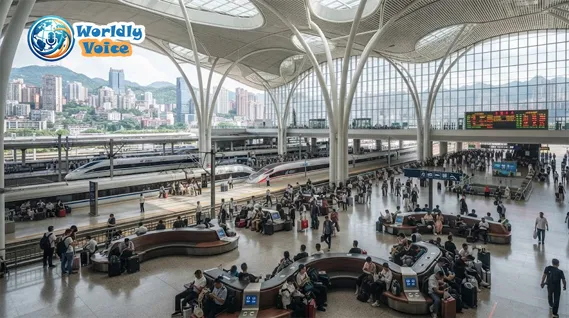
3. Chongqing East Station Terminal Map: Understanding the Vertical Layout
Use the interactive map below to explore the exact location and surrounding area of Chongqing East Railway Station.
The Chongqing East Station terminal map is essential because the station is layered across multiple floors. If you are used to flat railway stations, Chongqing East may feel confusing at first. But once you understand the vertical logic, navigation becomes simple.
Think of the station as a stack:
Chongqing East Railway Station: Main Passenger Areas
A simplified guide to the station’s main functional levels
| Main area | Main functions | What travelers should know |
|---|---|---|
| Elevated waiting area | Main railway waiting area, passenger services and entry facilities | This is the principal waiting area for railway passengers. |
| Railway platform area | Train platforms, boarding and railway transfers | Follow the electronic departure boards and platform signs for your train. |
| Entry and exit / transfer area | Passenger arrival and departure flows, buses, long-distance transport and other connections | Useful when continuing your journey by another form of transport. |
| Comprehensive transport transfer area | Taxi, ride-hailing, parking and connections through the integrated transport center | Follow signs for taxis, ride-hailing pickup points and parking facilities. |
| Metro transfer area | Connections between the railway station and Chongqing’s urban rail network | Use the station signs to reach the appropriate metro connection. |
In my experience, the biggest mistake travelers make is going to the wrong pickup level. If someone is meeting you, confirm whether they mean taxi, ride-hailing, metro, or private car parking. “I’m at Chongqing East” is not specific enough.
Chongqing East Station navigation tips
Here is the simple rule I use:
- Departing by train? Go up to 5F.
- Arriving and taking metro? Follow signs down to 1F.
- Arriving and taking taxi or Didi? Go to 2F.
- Connecting to a bus or airport service? Look for 3F signs.
- Driving or being picked up by private car? Check B1/B2 or signed pickup areas.
The signage is strong, but the station is large. Give yourself at least 45–60 minutes before departure if it is your first visit. During holidays such as Chinese New Year, National Day, or summer travel peaks, I would add even more time.
4. Chongqing East Railway Station Transport Links
The Chongqing East Railway Station transport links are one of the biggest reasons this station matters. It connects rail passengers with city metro, buses, taxis, ride-hailing, airport services, and future urban rail expansions.
Metro access
Metro Line 6 currently links the station with Chongqing’s urban rail system. A trip toward central areas such as Jiefangbei usually takes around 40–50 minutes, depending on transfers and walking time.
For route updates, fares, and network maps, check Chongqing Rail Transit, the official urban rail operator. This is especially useful because Chongqing’s metro network continues to expand.
Future lines, including Lines 24 and 27, are expected to improve Chongqing urban rail transit connectivity and reduce transfer pressure across the city.
Bus services
The station is served by several bus routes, including Routes 100, 102, 345, and the airport bus D620. Buses are useful if your destination is outside the metro network or you are traveling to nearby districts.
Taxi and ride-hailing
Taxi and ride-hailing pickup areas are located on 2F. A taxi ride from downtown Chongqing may cost around ¥45, though fares vary with traffic, time of day, and exact destination.
In my experience, ride-hailing works well here, but you must choose the correct pickup zone in the app. Screenshots help if you do not speak Chinese.
Air-rail integration
One standout feature is the airport city terminal. Passengers can access flight check-in services for Chongqing Jiangbei International Airport directly from the station area. For flight-specific rules, baggage deadlines, and terminal updates, always confirm with Chongqing Jiangbei International Airport.
This air-rail connection makes Chongqing East part of a broader Chongqing transportation hub guide strategy: high-speed rail, metro, bus, taxi, and airport services working together.
5. Chongqing East Station Accessibility and Services
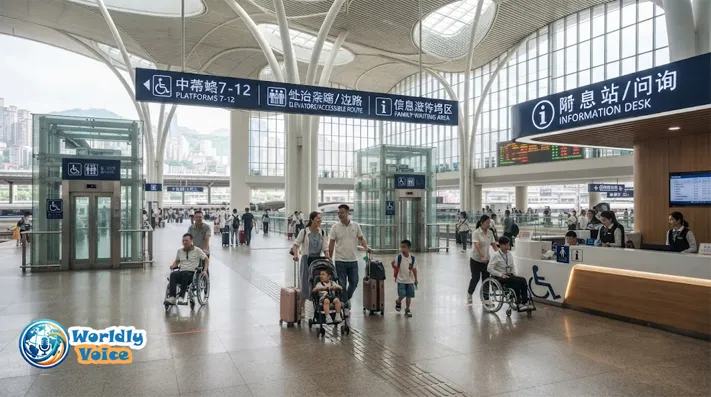
The Chongqing East station accessibility and services are among the station’s strongest features. Large stations can be exhausting for elderly travelers, parents with children, and passengers with mobility needs. Here, the barrier-free design is noticeable.
Accessibility features include:
- Wheelchair ramps
- Elevators between major levels
- Accessible restrooms
- Dedicated waiting areas
- Baby care rooms
- Clear floor markings
- Wide concourses
- Staff assistance points
- Bilingual signs in Chinese and English
Ride-hailing can be a convenient option for travelers who prefer door-to-door transportation, although pickup locations should be confirmed using the station’s current signs and instructions.
If you are traveling with family, use baby care rooms before boarding rather than waiting until the last minute. High-speed train boarding in China can move quickly, and gates often open only shortly before departure.
Passenger services worth knowing
China railway passenger services are increasingly digital, but staff support remains important. At Chongqing East, you can expect:
- Manual ticket counters
- Self-service machines
- Tourist information support
- Lost and found help
- Business lounges
- Waiting areas for special passengers
- Luggage storage counters
- Lockers priced around ¥18–30 per day, depending on size and duration
For international travelers, I recommend keeping your passport accessible. In China, passports are used for identity verification when taking trains, booking hotels, and entering some attractions.
6. Dining and Amenities at Chongqing East Railway Station
The Dining and amenities at Chongqing East Railway Station are practical, varied, and better than what many travelers expect from a transport hub.
You will find familiar chains such as McDonald’s, KFC, Lawson, and 7-Eleven, along with local food options inspired by Chongqing’s famous spicy cuisine. If you have time, try a quick bowl of Chongqing noodles before boarding. Just be careful with the chili oil if you are heading straight onto a long train ride.
What you can expect
- Fast food for quick meals
- Convenience stores for water, snacks, chargers, tissues, and umbrellas
- Local noodle and rice options
- Coffee and bottled drinks
- Souvenir shops
- Travel essentials
- Restrooms near waiting zones
- Drinking water rooms
- Seating areas with charging ports
Convenience stores can be a practical option for travelers who need water, snacks, or other essentials before continuing their journey.
For travelers creating content on the road, this is also a useful place to prepare gear. I would naturally connect this section with future internal guides like high-speed train packing checklist, China eSIM travel guide, and best noise-canceling headphones for travel.
7. Smart Technology and Station Comfort
The Facilities at Chongqing East Railway Station are not only about size. The station is also designed around smart passenger flow.
Digital screens show train numbers, destinations, boarding gates, and platform updates. Announcements are frequent, and key signage includes English. Free Wi-Fi is useful, though I still recommend having a local SIM or eSIM because app-based navigation, translation, and ride-hailing are easier with reliable mobile data.
Practical comfort tips
- Bring a power bank even though many seats have USB ports.
- Screenshot your train number and destination in Chinese.
- Use the 12306 app or printed ticket info to confirm gate changes.
- Avoid rushing between floors with heavy luggage.
- Use restrooms before gate opening to avoid crowds.
- Keep your passport and booking details together.
The station’s observation deck is also worth a short stop if you enjoy architecture. From there, you can appreciate the scale of the building and the layered cityscape around it.
8. Sample Itineraries: How I’d Use the Station
Sometimes the easiest way to understand a hub is through real travel scenarios.
Scenario 1: First-time visitor going downtown
You arrive by high-speed train. Follow signs to arrivals, then go down to Metro Line 6. Buy a metro ticket or use a supported mobile payment method. Expect around 40–50 minutes to reach central Chongqing, depending on your final stop.
Scenario 2: Business traveler connecting to a flight
Arrive at Chongqing East, follow signs to the airport city terminal on 3F, confirm check-in availability, then transfer to airport transport. Build in extra time for baggage rules and airline deadlines.
Scenario 3: Family with children
Use elevators, not stairs. Stop at a baby care room before boarding. Buy snacks and water early. Choose seating near your gate but away from the densest crowd.
Scenario 4: Traveler with heavy luggage
Use the 2F taxi or ride-hailing zones if convenience matters more than cost. If you are staying near a metro station, Line 6 is cheaper, but stairs and transfers can be tiring.
FAQs About Chongqing East Railway Station
1. Is Chongqing East Railway Station the world’s largest railway station?
It is widely described as the world’s largest railway station by built area, covering about 1.22 million square meters. Always check current official sources because rankings can change as new projects open.
2. How early should I arrive before my train?
For first-time visitors, I recommend arriving 45–60 minutes early. During holidays, arrive even earlier. The station is large, and security checks, elevators, and gate walking time can add up.
3. Does the station connect to the metro?
Yes. Metro Line 6 provides access to the wider Chongqing metro system. Future lines are expected to improve Chongqing urban rail transit connectivity further.
4. Are there lockers at Chongqing East Railway Station?
Yes. The station has luggage lockers and staffed storage counters. Prices are commonly around ¥18–30 per day, depending on locker size and storage time.
5. Is the station suitable for international travelers?
Yes, but preparation helps. Signs are bilingual in key areas, and major services are easy to identify. Keep your passport ready, use translation apps, and save your train details offline.
6. What should I pack for a smooth train trip?
Bring your passport, booking confirmation, water, snacks, charging cable, and power bank. If you work while traveling, check our future guides on Best Laptop GPUs for 4K Video Editing and best travel power banks.
Conclusion: Plan Ahead and Chongqing East Becomes Easy
The Facilities at Chongqing East Railway Station show how far modern rail travel in China has evolved. This is not just a place to board a train. It is a full transport ecosystem with metro access, bus routes, taxi zones, airport check-in, smart navigation, accessible services, and enough dining options to handle long waits.
My strongest advice is simple: study the floor layout before you go. The station is efficient, but it rewards preparation. Know your level, confirm your transport mode, arrive early, and keep your documents handy.
If you are building a wider China itinerary, pair this guide with future resources such as Chongqing weekend itinerary, China eSIM travel guide, and high-speed train packing checklist. Chongqing East is big, but with the right plan, it feels less like a maze and more like a gateway.
