


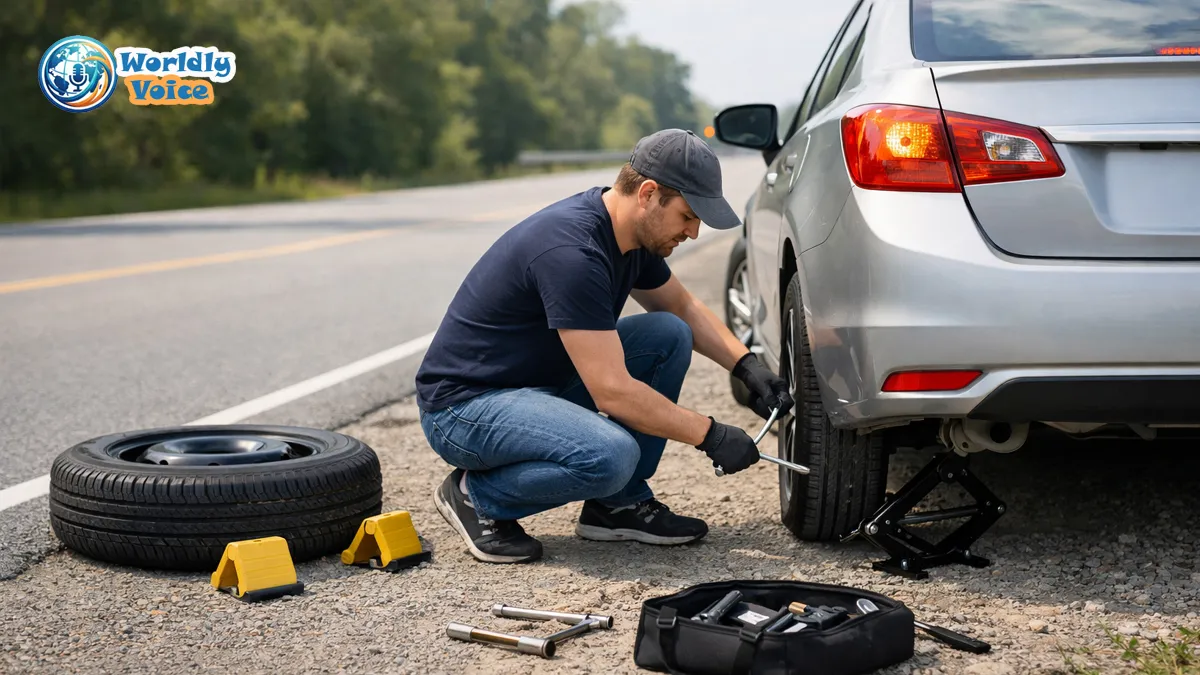
If you have ever stood on the shoulder of a road wondering how to change a tire, you are not alone. I have been there myself—hazard lights blinking, traffic rushing by, and that brief wave of panic that hits before training and common sense kick in. The good news is not that it is easy every time. It is that it is learnable. With the right tools, a calm approach, and a clear step by step flat tire change guide, most beginners can handle a roadside tire swap in about 15 to 30 minutes.
Knowing how to change a car tire safely is one of those practical skills that pays off when you least expect it. It can save time, reduce stress, and help you make smarter choices during an emergency roadside tire replacement. In my experience, the biggest mistakes happen before the jack even touches the car: stopping in a bad spot, forgetting the parking brake, or loosening nothing before lifting the vehicle. This guide is designed to help you avoid those errors.
I will walk you through the exact tools needed to change a tire, the safest order of steps, and when it is smarter to call for help instead of pushing through.
Why Knowing How to Change a Tire Matters
A flat tire rarely happens at a convenient time. It might hit on the way to work, during school pickup, or late at night after a long day. I have noticed that drivers who know the basics stay calmer and make better decisions. They are less likely to stand too close to traffic, misuse the jack, or damage wheel studs by tightening lug nuts unevenly.
There is another benefit too: confidence. Learning how to change a tire safely gives you more control in a stressful moment. Even if you ultimately call roadside assistance from AAA or another provider, understanding the process helps you judge whether conditions are safe and whether the person helping is following standard steps.
If car maintenance is new to you, you may also want to learn related warning signs, like What does it mean when engine light is blinking? or Why Is My Steering Wheel Shaking When I Brake. Tire trouble often appears alongside other maintenance issues, especially on older vehicles.
1. Safety Comes First Before You Touch the Car
Before any roadside emergency tire change, your first job is not grabbing the jack. It is creating a safe work area.
What to do if you get a flat tire
The moment you suspect a flat, do this:
- Grip the wheel firmly.
- Avoid slamming the brakes.
- Slow down gradually.
- Turn on your hazard lights.
- Pull over to a firm, level area away from moving traffic.
A parking lot is ideal. A wide shoulder may work. A curve, hill, muddy edge, or soft gravel is not a safe place to begin. In my experience, the most dangerous tire changes happen because people feel rushed and stop too soon.
Set the car so it cannot roll
Once stopped:
- Put the car in Park, or in first gear if driving a manual.
- Engage the parking brake.
- Place wheel chocks behind or in front of the tire opposite the flat.
- If you do not have chocks, use sturdy blocks or heavy objects in a pinch.
If the flat is on the driver’s side near fast traffic, ask yourself a hard question: is this truly safe? If not, call professional help. No tire is worth an injury.
For official roadside safety recommendations, the NHTSA roadside emergencies guidance is worth reviewing.
2. Gather the Tools Needed to Change a Tire
Every car owner should know the tools needed to change a tire before an emergency happens. I recommend checking your trunk today, not later. Many drivers assume everything is there, only to discover a missing lug wrench or a flat spare when they need it most.
Essential tire-changing tools
| Tool | Why You Need It | Notes |
|---|---|---|
| Spare tire | Replaces the flat | Make sure it is properly inflated |
| Car jack | Lifts the vehicle | Use the jack supplied for your vehicle or a compatible hydraulic jack |
| Lug wrench | Loosens and tightens lug nuts | A breaker bar can help with stuck nuts |
| Wheel chocks | Prevent rolling | Small but important safety item |
| Flashlight | Helps in low light | A headlamp is even better |
| Gloves | Protect your hands | Useful in wet or cold weather |
| Tire pressure gauge | Checks spare inflation | Important before driving away |
| Torque wrench | Tightens to spec | Optional, but best practice |
A compact spare, often called a “donut,” is not the same as a full-size spare. It is meant for short-term use only. Most manufacturers limit compact spares to around 50 miles and 50 mph, though you should always confirm your vehicle’s manual.
For spare tire and tire pressure guidance, tire safety tips from Bridgestone offer practical manufacturer-aligned advice.
3. Check the Spare Before You Begin
This step is often skipped in a typical step-by-step flat tire guide, but it matters. Before lifting the vehicle, inspect the spare.
Look for:
- Visible sidewall cracks
- Low tread or obvious damage
- Low air pressure
- Wrong size or incompatible fitment
I once helped a neighbor who did everything right—except checking the spare. It was nearly flat. That turned a 20-minute job into a call for assistance. Since then, I always tell people to inspect and inflate the spare during routine maintenance.
This is also a good habit to pair with broader car care. If you stay on top of basics, from tires to warning lights, you are less likely to be stranded unexpectedly.

4. Loosen the Lug Nuts While the Tire Is Still on the Ground
This is one of the most important lessons in how to change a tire. Always loosen the lug nuts before you raise the car.
Why? Because the wheel is still braced by the ground. If you try loosening tight lug nuts after lifting the vehicle, the wheel may spin or the car may shift on the jack.
How to loosen them correctly
- Remove the hubcap if needed.
- Fit the lug wrench securely onto one lug nut.
- Turn counterclockwise.
- Loosen each nut about a quarter turn. Do not remove them yet.
If the nuts are extremely tight, use controlled body weight on the wrench. Do not jerk the tool. Smooth pressure is safer and more effective.
This is also where many people first appreciate how to use a car jack and lug wrench as a coordinated system, not as separate tasks.
5. Place the Jack at the Correct Jack Point
This step separates a proper tire change from a risky one. Every vehicle has designated jack points, usually reinforced spots under the frame or pinch weld. Your owner’s manual will show the exact location.
Why jack placement matters
If you place the jack under a weak part of the body, you can:
- Bend metal
- Damage the undercarriage
- Cause the vehicle to slip
I have seen beginners guess this step, and it rarely ends well. If you are learning changing a car tire for beginners, treat the owner’s manual like a map. Guessing costs more than checking.
Raise the car until the flat tire is about 2 to 3 inches off the ground. No higher than necessary.
For general maintenance awareness, this is the same mindset I recommend in practical home guides like How to Clean Baseboard Heaters—slow down, identify the correct contact points, and avoid preventable damage.
6. Remove the Flat Tire and Mount the Spare
Now the real swap begins.
Removing the flat
Once the car is lifted:
- Finish removing the loosened lug nuts.
- Keep them together in a safe spot.
- Pull the flat tire straight toward you.
Sometimes the wheel sticks from rust or corrosion. If that happens, a careful tap with the heel of your hand can help break it loose. Do not crawl under the vehicle.
Mounting the spare
Line up the spare with the lug studs and slide it onto the hub. Then:
- Hand-thread the lug nuts first
- Turn each nut until snug
- Avoid cross-threading
This is where patience matters. If a lug nut resists immediately, back it off and realign. Forcing it can damage the threads.
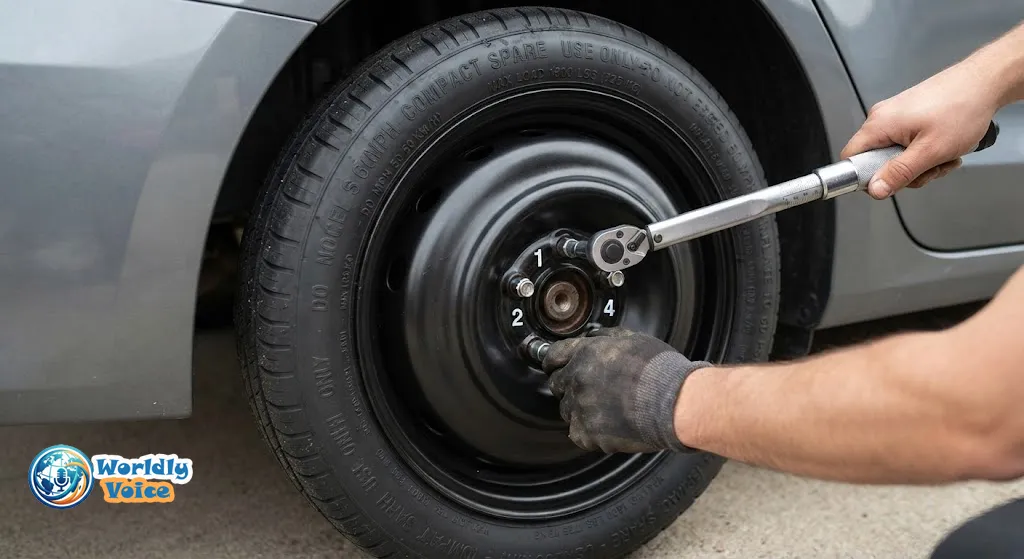
7. Tighten the Lug Nuts in a Star Pattern
This is one of the most repeated expert tips because it is right: tighten in a star or crisscross pattern, not in a circle.
Why? Even pressure. A circular tightening sequence can seat the wheel unevenly. The star pattern helps center the wheel properly against the hub.
Basic star pattern example
If there are five lug nuts, tighten like this:
- Top
- Lower left
- Upper right
- Lower right
- Upper left
Snug them while the car is still elevated. Then lower the vehicle until the tire touches the ground enough to resist spinning, and tighten further.
This is core to how to change a car tire safely, and it is a step many rushed drivers get wrong.
8. Lower the Vehicle and Torque to Specification
Once the spare is mounted and the lug nuts are snug:
- Lower the car fully.
- Remove the jack.
- Tighten the lug nuts again in a star pattern.
If you have a torque wrench, use the manufacturer’s recommended torque spec from the owner’s manual. That is the best practice. Over-tightening can stretch studs. Under-tightening can allow wheel movement.
If you only have a standard lug wrench, make the nuts firmly tight, then have them checked professionally as soon as possible.
According to AAA flat tire safety tips, rechecking lug nut tightness after a short drive is a smart safety habit.
9. Check Tire Pressure and Understand Spare Tire Limits
Do not assume the job is over once the car is back on the ground. A spare tire still needs to be roadworthy.
Check these before driving away
- Tire pressure
- Lug nut tightness
- Tool storage
- Flat tire secured in trunk
- Hubcap or wheel cover if applicable
If you are using a compact spare, keep your speed and distance limited. Drive directly to a tire repair shop or service center. A donut is a temporary solution, not a normal replacement tire.
I have noticed that beginners often treat the spare like a reset button. It is not. It is a bridge between the breakdown and the repair.
10. When You Should Call for Help Instead
A strong guide on how to change a tire should also tell you when not to do it yourself.
Call for help if:
- You are on a narrow highway shoulder
- The ground is sloped, muddy, sandy, or unstable
- You do not have the proper tools
- The spare is flat or damaged
- The lug nuts are seized
- You have a physical limitation that makes lifting or loosening unsafe
- Weather conditions are poor
- You simply do not feel confident
That is not failure. That is judgment.
In my experience, confidence should never outrun conditions. There are moments when the safest decision is to step back and let trained roadside support handle the emergency roadside tire replacement.
Beginner Mistakes I See Most Often
Here are the common errors I would help a first-time driver avoid:
- Starting on an unsafe shoulder
- Forgetting hazard lights
- Not using wheel chocks
- Lifting the car before loosening lug nuts
- Placing the jack in the wrong location
- Tightening lug nuts in a circle
- Driving too far on a compact spare
- Failing to repair or replace the original tire quickly
The same practical mindset applies in daily life too. Whether you are troubleshooting a vehicle or learning something new like How to Start a Zero-Waste Lifestyle on a Budget or even a career topic such as How to Become a Disney Travel Agent, the pattern is similar: prepare well, follow a sequence, and avoid shortcuts.
Quick Reference Checklist
Before you start a roadside emergency tire change, confirm you have:
- Safe location ✔
- Hazard lights on ✔
- Parking brake engaged ✔
- Wheel chocks in place ✔
- Spare tire ✔
- Jack ✔
- Lug wrench ✔
- Gloves and flashlight ✔
- Tire pressure gauge ✔
- Torque wrench if available ✔
FAQs
How long does it take to change a tire?
Usually 15 to 30 minutes if you have the right gear and a safe place to work. For beginners, it may take longer the first time.
Can I change a tire without a jack?
No, not safely. For most vehicles, you need a proper jack to lift the wheel off the ground during a flat tire change.
What should I do if the lug nuts will not move?
Use steady pressure with the lug wrench or a breaker bar. If they still do not budge, call roadside help. Forcing the issue can be dangerous.
Is it safe to drive on a donut spare?
Yes, but only temporarily. Follow the speed and distance limits in your owner’s manual, often around 50 mph and 50 miles.
What if I get a flat in bad weather or at night?
Treat visibility and traffic risk as top priorities. Use hazard lights, a flashlight, and reflective gear if you have it. If conditions feel unsafe, call for assistance.
Where can I learn related vehicle warning signs?
If you are building basic car knowledge, articles like Why Is My Steering Wheel Shaking When I Brake and What does it mean when engine light is blinking? can help you spot bigger problems early.
Final Thoughts
Learning how to change a tire is one of the simplest ways to become more prepared on the road. It is not about pretending every driver should act like a mechanic. It is about knowing the safe sequence: pull over carefully, secure the vehicle, gather the tools needed to change a tire, loosen the lug nuts before lifting, use the correct jack point, tighten in a star pattern, and check pressure before driving off.
If you remember only one thing from this step by step flat tire change guide, let it be this: safety comes before speed. In my experience, that single mindset makes every part of the job better. Practice once in your driveway if you can. That way, if you ever face a real emergency roadside tire replacement, you will not be learning under pressure.
References
- Bridgestone: tire safety tips
