


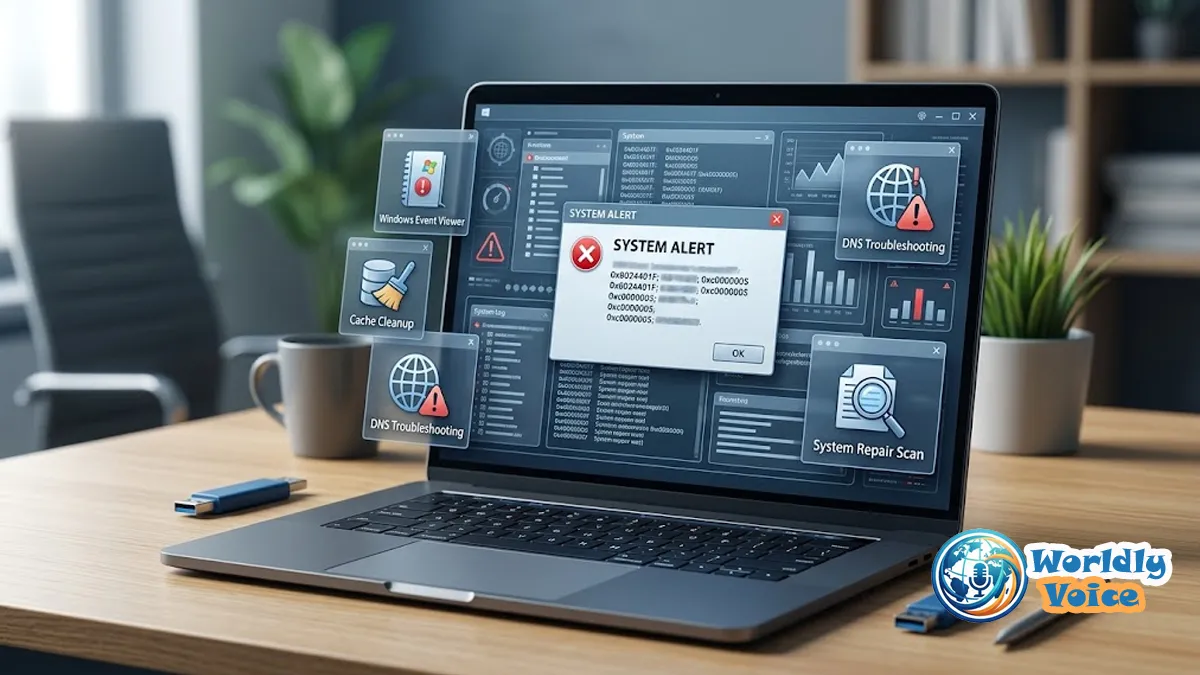
If you are searching for the error llekomiss, you are probably dealing with one of the most frustrating types of tech problems: an error message that appears real, blocks your work, but has almost no public documentation behind it.
I’ve handled similar cases where a user sends a screenshot, a log snippet, or a mysterious popup, and the error code simply does not exist in official manuals, software forums, or vendor knowledge bases. In my experience, that usually means one of three things: the error is new, misspelled, or generated by a very specific local application.
That does not mean you are stuck.
This guide explains what is the error llekomiss, why it may appear, and how to approach it like a technician would. We’ll use a practical, step-by-step process that works for unlisted software error codes, corrupted app files, cache problems, DNS issues, and system-level glitches.
I’ll keep it simple, but not shallow.
What is “the error llekomiss”?
At the time of writing, there is no widely documented public record for the error llekomiss in major operating system references, common developer documentation, or known software support databases.
That matters.
When an error has no official page, no vendor article, and no repeatable fix, I treat it less like a “known error code” and more like a clue. The word “llekomiss” may not be the root problem. It may be a symptom produced by something else.
In my experience, undocumented error strings usually fall into one of these categories.
Quick Fix Summary
If you are encountering the “llekomiss” error, it is likely an internal application conflict, a corrupted local data string, or a browser cache issue. To fix this quickly, follow these steps:
- Restart the Application: Fully close the program via Task Manager or Activity Monitor and relaunch it to clear stuck processes.
- Clear Temporary Files: Delete your
%temp%files and clear your browser’s cache and site data to remove corrupted configuration strings. - Run System Repairs: Open Command Prompt as an administrator and run
sfc /scannowto detect and repair corrupted system files. - Check Network Settings: If the error occurs during login or VPN use, flush your DNS by running
ipconfig /flushdnsin the command prompt.
If these steps do not resolve the issue, perform a clean reinstall of the affected application.
1. A proprietary or internal software message
Some companies use custom software that produces private log codes. These codes are meaningful only inside that organization’s system.
For example, an internal inventory tool may generate a label like:
llekomiss_failed_requestERR_LLEKOMISS_TIMEOUTmodule_llekomiss_missing
To the public internet, that looks meaningless. But inside the software, it may point to a missing file, failed API call, expired session, or broken user permission.
If you saw the error llekomiss inside workplace software, a web portal, a CRM, an ERP system, or a private dashboard, it may be an internal application error rather than a Windows, macOS, Android, or browser error.
2. A typo, corrupted string, or broken translation
I’ve seen error codes become unreadable because a file was partially corrupted. A normal word or module name gets distorted, then appears in logs as a strange phrase.
That is where corrupted data string troubleshooting becomes useful.
A corrupted string can happen when:
- A cache file is damaged.
- A language file fails to load.
- A plugin or extension injects bad data.
- An update overwrites part of a configuration file.
- A log parser misreads characters.
This is why “llekomiss” may not be something you fix directly. You may need to find the program that created it.
3. A niche plugin, mod, or third-party dependency
Errors like this often appear in modified environments.
That includes:
- Game mods
- Browser extensions
- Automation scripts
- VPN clients
- Enterprise login tools
- Custom API connectors
- Local development environments
If the issue appeared after installing an extension, mod, update, or network tool, focus there first.
For example, I once investigated an obscure error in a small business workstation that looked like a malware alert. It turned out to be a broken VPN profile calling an outdated script. That is why related topics like How to Configure OpenVPN Client Config Dir, VPN client log troubleshooting, and network authentication error fixes can be relevant when the error appears during connection attempts.
The Error Llekomiss Troubleshooting Guide
The best way to solve an undocumented glitch is to work backward.
Do not start by guessing. Start by locating the source.
This section is the error llekomiss troubleshooting guide I would use if I were sitting in front of the affected machine.
Step 1: Capture the exact context
Before changing settings, write down exactly when the error appears.
Ask yourself:
- Does it appear at startup?
- Does it happen only when opening one app?
- Does it show after login?
- Does it happen during a browser session?
- Does it appear when connecting to a VPN or server?
- Does it happen after an update?
- Is there a full error message before or after “llekomiss”?
This step sounds basic, but it is often the turning point.
A popup that appears at system startup points to a startup service. An error inside one app points to that app’s files. A failure during a network request may involve DNS, proxy, VPN, or firewall settings.
In my experience, the text around the error is more useful than the strange word itself.
Look for nearby clues such as:
- File paths
- App names
.exe,.dll,.json, or.logfiles- Server names
- Timestamps
- Error numbers
- Permission warnings
If you see something like:
C:\Program Files\AppName\llekomiss.dll failed to load
that suggests a missing or corrupted app component.
If you see:
Request failed: llekomiss endpoint unavailable
that points toward a server-side or network issue.
Step 2: Restart the affected application safely
A simple restart is not always enough.
If the error is tied to one application, fully close it first.
On Windows:
- Press
Ctrl + Shift + Esc. - Open Task Manager.
- Find the app.
- Select End task.
- Reopen it as administrator if appropriate.
On macOS:
- Open Activity Monitor.
- Select the affected process.
- Quit or force quit it.
- Relaunch the app.
This clears stuck processes that may continue running in the background after the window closes.
I’ve noticed that obscure messages often repeat because a helper service never stopped properly. Closing the visible app does not always shut down its background agent.
Step 3: Check system logs for the real source
When an error has no public documentation, logs become your map.
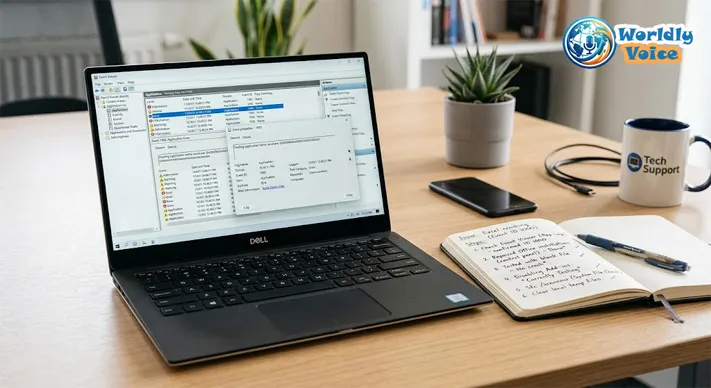
On Windows, use Event Viewer. Microsoft provides guidance around Windows Event Viewer application logs, and I strongly recommend checking them when an unknown error repeats.
To inspect logs:
- Press
Windows + R. - Type
eventvwr. - Press Enter.
- Go to Windows Logs > Application.
- Look for warnings or errors at the same time the message appeared.
Pay attention to:
- Faulting application name
- Faulting module name
- Event ID
- Exception code
- File path
On macOS, use Console.
On Linux, check logs in:
/var/log/syslog/var/log/messages- Application-specific log folders
journalctl
This is where the error llekomiss troubleshooting guide becomes more precise. Instead of searching the unknown word, you identify the process behind it.
Step 4: Clear temporary files and corrupted cache
Temporary files can cause strange behavior when apps load outdated or damaged data.
On Windows, try a careful %temp% file cleanup:
- Press
Windows + R. - Type
%temp%. - Press Enter.
- Select temporary files.
- Delete what Windows allows.
- Skip files currently in use.
Then clear the affected application’s cache if it has one.
For browsers, clear:
- Cached images and files
- Site data for the affected service
- Extension cache, if applicable
For desktop apps, check settings for a cache reset option.
This step helps when the error llekomiss appears after a failed update, login loop, or broken session.
Step 5: Verify or repair application files
If the error belongs to a specific app, repair the app before changing system settings.
Many platforms include built-in repair tools.
Examples:
| Environment | What to Try | Why It Helps |
|---|---|---|
| Steam game | Verify integrity of game files | Replaces missing or corrupted game files |
| Epic Games Launcher | Verify installation | Detects damaged files after updates |
| Microsoft Store app | Repair or reset app | Rebuilds local app data |
| Enterprise app | Reinstall from official installer | Restores approved dependencies |
| Browser extension | Disable, update, or reinstall | Removes corrupted extension files |
| VPN client | Reimport profile | Fixes broken connection configuration |
The phrase verify integrity of application files matters here because many obscure errors come from one missing file. The system may not know how to explain it, so it throws a strange internal label instead.
If you are working with network tools, this is also where How to Configure OpenVPN Client Config Dir may become useful as an internal reference topic. A misread VPN client directory, missing certificate, or malformed profile can create errors that look unrelated to networking at first.
How to Fix the Error Llekomiss (General System Remedies)
If you still need a llekomiss error code fix, move from app-level checks to system-level repairs.
These steps are safe when done carefully and are widely used by support technicians.
1. Run System File Checker
On Windows, the System File Checker can repair missing or corrupted protected system files.
Microsoft documents the system file checker scannow process as a standard repair method.
To run it:
- Open Start.
- Type
cmd. - Right-click Command Prompt.
- Choose Run as administrator.
- Type:
textCopy
sfc /scannow- Press Enter.
- Wait for the scan to reach 100%.
- Restart your computer.
Use this if the error appears across multiple apps, appears at startup, or follows a crash.
In my experience, sfc /scannow is not a magic fix for every problem, but it is a sensible baseline check. It can rule out damaged Windows files before you spend time reinstalling unrelated apps.
2. Use DISM if SFC finds problems
If System File Checker reports corruption but cannot repair everything, run DISM.
Open Command Prompt as administrator and run:
textCopy
DISM /Online /Cleanup-Image /RestoreHealthAfter it finishes, run:
textCopy
sfc /scannowagain.
DISM repairs the Windows image that SFC uses as its source. Think of it like repairing the repair kit before using it again.
3. Flush DNS if the error appears during web or network activity
If the error llekomiss appears while signing in, loading a portal, connecting to a server, or using a VPN, test the network layer.
A stale DNS cache can send your computer to old or incorrect network addresses.
On Windows, use the ipconfig flushdns command:
textCopy
ipconfig /flushdnsThen restart the browser or app and try again.
This is especially relevant for:
- Enterprise portals
- VPN access
- Cloud dashboards
- Browser-based tools
- Recently migrated websites
- Internal company domains
If you manage remote access tools, related internal topics like VPN DNS resolution troubleshooting, OpenVPN client configuration errors, and secure remote access setup may help connect the dots.
4. Review recent updates, installs, and rollbacks
Most studies and support patterns agree on one practical point: new errors often follow recent change.
Check what changed before the error started.
Look at:
- Windows Update history
- Recently installed apps
- Driver updates
- Browser extensions
- Security software updates
- VPN profile changes
- Game mods or patches
If the issue began after one specific install, uninstall or roll it back temporarily.
On Windows:
- Open Settings.
- Go to Apps > Installed apps.
- Sort by install date.
- Remove suspicious recent additions.
For updates:
- Open Settings.
- Go to Windows Update > Update history.
- Review recent changes.
I prefer changing one thing at a time. If you remove five items at once and the issue disappears, you still do not know which one caused it.
5. Test in a clean boot environment
A clean boot starts Windows with minimal third-party services.
This helps identify whether a background app is generating the unknown error.
Use it when:
- The error appears at startup.
- You cannot identify the app.
- Logs show multiple services failing.
- Antivirus, sync tools, or VPN clients launch automatically.
A clean boot is not the same as Safe Mode. It keeps Windows usable while reducing interference from non-Microsoft services.
If the error disappears during clean boot, re-enable services in small groups until the problem returns. That helps isolate the trigger.
6. Reinstall the affected application
If the error follows one app and repair does not help, reinstall it cleanly.
Recommended process:
- Back up important settings or projects.
- Uninstall the app.
- Restart the computer.
- Remove leftover cache folders if documented by the vendor.
- Download the latest installer from the official website.
- Reinstall.
- Test before adding plugins, mods, or extensions back.
Avoid downloading “DLL fixer” tools or unofficial patchers. They often create more risk than they solve.
For enterprise software, ask your IT team for the approved installer. A public installer may not include company-specific configuration files.
Practical Case Examples
Case 1: The error appears in a browser portal
A user sees the error llekomiss after logging into a company dashboard.
I would check:
- Browser cache
- Extensions
- DNS cache
- VPN connection
- Console errors in developer tools
- Whether other users have the same issue
If multiple users see it, the problem is likely server-side. If only one user sees it, local cache, DNS, or extensions are more likely.
Case 2: The error appears after launching a game
Here, the fastest path is often:
- Disable mods.
- Verify game files.
- Update graphics drivers.
- Check launcher logs.
- Reinstall the mod manager if needed.
The phrase “llekomiss” could be a mod label, script name, or corrupted asset reference.
Case 3: The error appears at Windows startup
Startup errors usually involve services, scheduled tasks, or broken app launchers.
I would check:
- Task Manager startup apps
- Event Viewer application logs
- Task Scheduler
- Recently removed applications
- Security software logs
This is where the llekomiss error code fix may involve removing a broken startup entry rather than repairing Windows itself.
FAQ: The Error Llekomiss
What is the error llekomiss?
The error llekomiss appears to be an undocumented or unlisted error phrase. It may come from proprietary software, a corrupted data string, a plugin, a mod, or a local application log rather than a known public error code.
How to fix the error llekomiss quickly?
Start by identifying where it appears. Then restart the app, check logs, clear cache, run %temp% cleanup, verify app files, and use sfc /scannow if the problem seems system-wide.
Is the error llekomiss a virus?
Not necessarily. Unknown error text does not automatically mean malware. Still, if it appears with popups, redirects, unknown startup apps, or suspicious downloads, run a scan with trusted security software.
Why can’t I find this error online?
Many unlisted software error codes are internal, new, misspelled, or generated by niche tools. Public search results may not exist until enough users report the same problem.
Can DNS cause the error llekomiss?
Yes, if the error appears during login, server access, VPN use, or web requests. Try the ipconfig /flushdns command and confirm your VPN or network settings. Related topics like How to Configure OpenVPN Client Config Dir may help if the error appears during remote access.
Should I reinstall Windows?
Usually, no. Try app repair, log review, cache cleanup, System File Checker, DISM, and clean boot first. Reinstalling Windows should be a last resort.
Conclusion
When you face the error llekomiss, the most important thing is not to panic or chase random fixes. Treat it like an undocumented clue.
Start with context. Find where it appears. Check logs. Clear temporary files. Repair the affected app. Then move to system-level tools like System File Checker, DISM, and DNS flushing if needed.
In my experience, obscure errors are rarely solved by searching the strange word alone. They are solved by identifying the process, file, update, or network path behind it.
If your issue involves VPNs, internal portals, or remote access, keep related resources such as How to Configure OpenVPN Client Config Dir, VPN client log troubleshooting, and DNS cache flush guide for Windows close by. These adjacent topics often reveal the missing link.
The best how to fix the error llekomiss strategy is structured troubleshooting: observe, isolate, repair, test, and document what changed.
References
- Microsoft Support — system file checker scannow
- Microsoft Learn — Windows Event Viewer application logs
- Microsoft Learn — ipconfig flushdns command

Muhammad Ali is a digital content publisher and the founder of WorldlyVoice. With extensive experience in technical website management and SEO, he specializes in building high-performance editorial platforms that deliver credible and accessible information to a global audience.
Connect with Muhammad Ali:
Website: WorldlyVoice.com
Email: [email protected]
LinkedIn: Professional Profile
Facebook: Personal Profile
For inquiries, please reach out via the provided social channels or through the official contact portal on WorldlyVoice.