


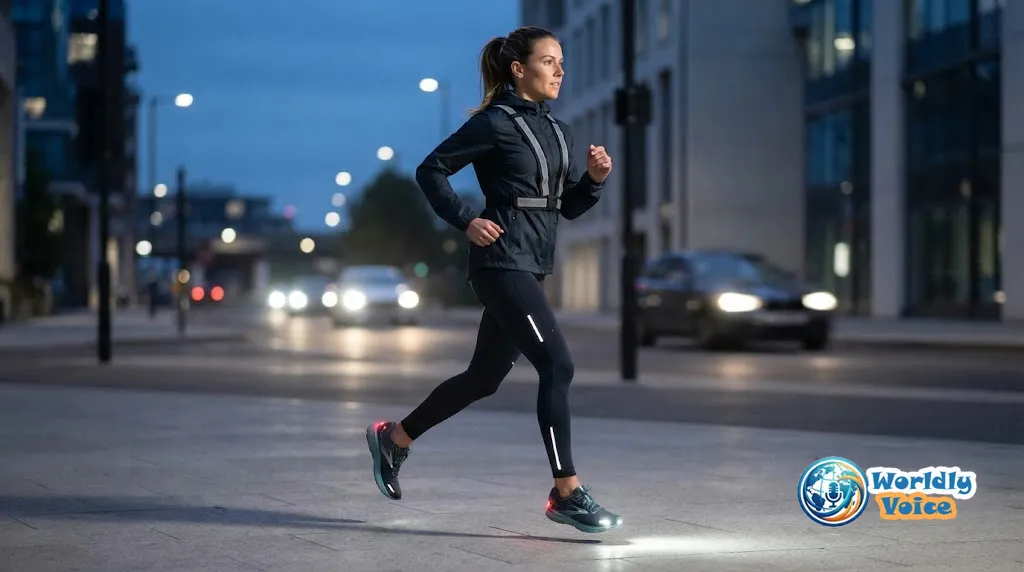
Running after sunset can feel peaceful. The roads are quieter, the air is cooler, and the day’s pressure begins to fade. But darkness changes what we need from our footwear. The Best LED Light Running Shoes for Women must support the feet, illuminate or improve visibility, grip the surface, and remain comfortable beyond the first few minutes.
The challenge is that search results mix three very different products:
- Running shoes with LED lights permanently built into them
- Rechargeable lights that attach to regular running shoes
- Reflective running shoes that become visible under headlights
I reviewed current manufacturer specifications, specialist running guidance, and reflective performance models to separate practical night-running equipment from fashion-focused illuminated sneakers. I have not physically lab-tested every product listed here. Where a brightness or runtime figure comes from a manufacturer, I identify it as a stated specification rather than an independent guarantee.
Quick verdict: Women who need new footwear may prefer a reflective performance shoe or a specialised integrated-light model. Women who already own properly fitted running shoes will usually get more flexibility from rechargeable shoe-mounted lights.
Before choosing, it also helps to review a women’s night running safety checklist, especially when running alone or using unfamiliar routes.
1. Why “Light-Up Running Shoes” Can Be Misleading
Many colourful USB-rechargeable sneakers are marketed as running shoes because they have an athletic shape. In reality, most are designed for parties, dancing, festivals, casual walking, or visual appeal.
Their product descriptions often concentrate on:
- Colour-changing modes
- Flashing patterns
- Hidden charging ports
- Remote controls
- Glowing soles
Those features may be entertaining, but they reveal little about heel security, cushioning, breathability, traction, arch support, or stability.
When I compare a fashion LED sneaker with a purpose-built trainer, the difference is similar to comparing costume jewellery with a sports watch. Both may look attractive, but only one has been designed around athletic performance.
This does not mean every integrated-light shoe is unsuitable. It means women should evaluate the footwear first and the lighting system second. Unlike style-led topics such as Mermaid Wedding Dress Trends, running equipment cannot be chosen primarily by appearance.
2. How I Evaluated the Best LED Light Running Shoes for Women
A practical comparison should answer two different questions:
- Can the product help the runner see the ground?
- Can it help drivers, cyclists, and other people see the runner?
These are not the same function.
A small flashing heel light may attract attention without illuminating a pothole. A strong forward-facing beam may reveal the pavement but provide limited visibility from behind. The safest setups cover both needs.
I used the following criteria:
Brightness
Lumens measure visible light output. A higher number generally means a brighter beam, although beam shape and angle also matter.
Visibility direction
Front lights help with navigation. Red rear lights alert people approaching from behind. Side visibility becomes especially important at junctions and driveways.
Battery life
A light should comfortably outlast the planned workout. A 45-minute run should not begin with a battery that has only 50 minutes of uncertain charge remaining.
Running comfort
The system should not bounce, loosen the laces, press against the top of the foot, or noticeably change the runner’s stride.
Fit and support
For complete LED shoes, I look beyond the electronics. Toe-box space, heel hold, cushioning, stability, and outsole grip still determine whether the shoe is suitable for regular mileage.
Weather resistance
Rain, damp pavements, and puddles are normal parts of outdoor training. “Weatherproof” or “water-resistant” should not automatically be interpreted as fully waterproof.
Replacement flexibility
A removable light can move between road shoes, walking trainers, and trail footwear. An integrated system remains tied to one pair.
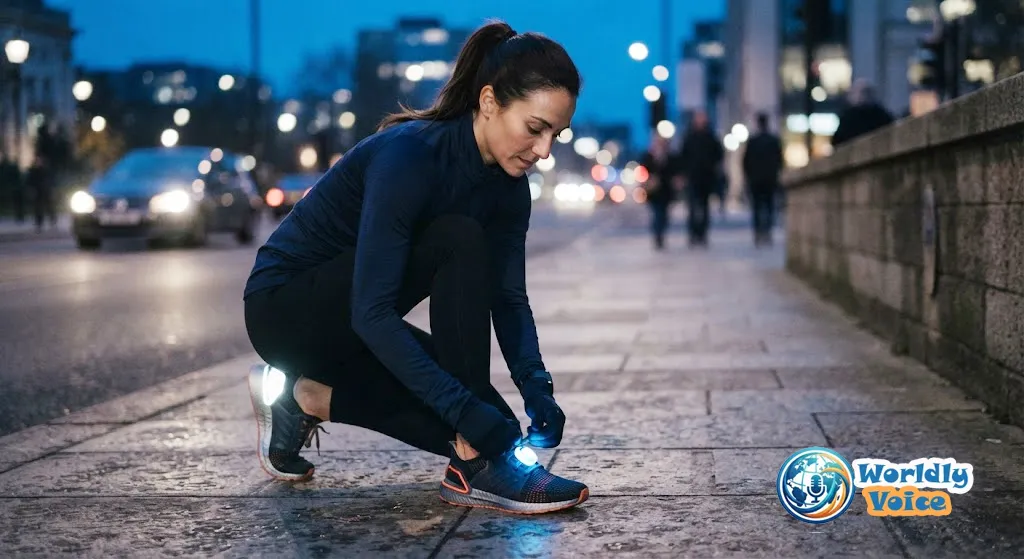
3. Best Complete LED Running Shoe: High Beam Women’s Night Runner
Women looking specifically for illuminated running shoes for night safety should consider the High Beam Women’s Night Runner as one of the clearest examples of an integrated system.
High Beam states that its women’s model uses front LEDs with more than 20 feet of forward illumination and a 180-degree lighting radius. Rear LEDs are intended to improve visibility from behind. The company lists a five-hour runtime and an approximately three-hour magnetic charging period.
The shoe also has a knit upper and an outsole intended for active use. Because the lights are built in, there is nothing to attach to the laces before leaving home.
What I like about the concept
The all-in-one design is convenient. It reduces preparation time and prevents a removable light from being forgotten in another bag.
The front-and-rear arrangement is also more useful than illuminated midsoles that simply glow around the shoe. It attempts to provide both ground-level illumination and rear visibility.
What I would check before buying
The lighting specifications should not distract from fit. An integrated LED system has limited value when the heel slips, the toe box feels narrow, or the cushioning does not suit the runner’s distance.
I would use this model mainly for walking, dog walking, jogging, and shorter road sessions unless its fit and ride feel comfortable during a gradual trial period. Serious runners should never select a poor-fitting shoe solely because its lights are convenient.
4. Night Runner 270 Shoe Lights Review
The night runner 270 shoe lights are not running shoes. They are two rechargeable lighting units that attach to the shoelaces of shoes the runner already owns.
That distinction matters. It allows women to continue using footwear selected for their gait, arch shape, width, training distance, and cushioning preferences.
The manufacturer currently lists:
- A combined 150-lumen forward beam
- Illumination reaching up to approximately 30 feet
- Side and rear-facing red lights
- 360-degree visibility
- Standard, high, and flashing modes
- More than two hours of battery life on high
- Up to five hours on low
- Weatherproof construction
- A secure shoelace attachment
Runner’s World named Night Runner 270 its “Best Shoe Lights” choice in its running-light guide updated on July 24, 2026. Its editors assessed running lights using factors such as brightness, battery life, comfort, and real-world use.
Why the low beam can be useful
Because the lights sit close to the feet, they can reveal kerbs, broken pavement, shallow holes, and surface changes before the runner steps onto them.
I see this as the product’s strongest advantage for road running. A head-mounted beam shows where the eyes are directed. A shoe-mounted beam highlights what the feet are approaching.
The rear red lights also add a visibility layer that many standard headlamps lack.
Comfort and attachment
The units fasten to the shoelaces, so installation does not require permanent shoe modification. However, women should test the attachment during a short walk before beginning a full run.
Check that:
- The laces remain secure
- The light does not press into the top of the foot
- The beam points at the ground rather than upward
- Neither unit moves excessively during faster strides
Limitations on trails
Shoe-level lighting moves with every step. This can create shifting shadows around roots and rocks. Uneven terrain may also block a low-mounted beam more easily than a headlamp positioned near eye level.
Some shoppers call these products hands-free running headlamps for shoes, but “shoe-mounted running lights” is the more accurate description.
For pavements, roads, parks, and moderately lit paths, the Night Runner 270 system is practical. On completely dark or technical trails, I would pair it with a proper headlamp rather than depend on it alone.
5. Illuminated Shoes Versus Reflective Running Shoes
Active visibility comes from a powered light that creates its own illumination.
Examples include:
- Front-facing LEDs
- Flashing heel lights
- Rechargeable lace lights
- Lighted running vests
Passive visibility comes from reflective material. It produces no light. Instead, it sends light from vehicles, bicycles, streetlamps, or another source back toward that source.
Reflective trainers require no charging and add almost no electronic weight. However, they are most effective when an external beam reaches them.
Illuminated products remain visible without direct vehicle headlights. Their disadvantages include battery management, charging, and possible electronic failure.
In my view, the strongest solution is not choosing one technology over the other. It is combining active lighting with substantial reflective coverage.
REI recommends using headlamps, reflective clothing, and safety lights together. It also warns that a small reflective logo may not provide enough coverage and suggests at least 200 lumens for a primary runner’s light.
Because Night Runner 270 produces a stated 150 lumens, I consider it suitable for many urban runs but not a guaranteed replacement for a stronger headlamp in total darkness.
6. Best Reflective Shoes With Built-In Lights: Know the Difference
The phrase best reflective shoes with built-in lights combines two categories that are usually separate.
Reflective shoes return external light. Built-in LED shoes generate their own light. Most mainstream performance brands use reflective trims rather than installing rechargeable electronics in the footwear.
Here is a practical comparison:
| Product or category | Visibility system | Stated lighting or runtime | Best suited to | Main limitation |
|---|---|---|---|---|
| High Beam Women’s Night Runner | Integrated front and rear LEDs | 20+ feet forward light; five-hour runtime | Walking, jogging, road exercise, all-in-one convenience | Fit and cushioning choices are limited to one shoe platform |
| Night Runner 270 | Removable lace-mounted LEDs | 150 lumens; up to 30 feet; 2+ hours high and five hours low | Runners who already own suitable shoes | Moving beam and lower trail visibility |
| ASICS GEL-CUMULUS 27 LITE-SHOW | Reflective material | No battery or lumen output | Comfortable daily road running | Requires an external light source |
| ASICS NOVABLAST 5 LITE-SHOW | Reflective material | No battery or lumen output | Responsive daily training | Reflectivity does not illuminate the road |
| ASICS GT-2000 14 LITE-SHOW | Reflective material and stability platform | No battery or lumen output | Runners seeking additional guidance and support | Availability may vary as newer versions arrive |
| HOKA Bondi 9 | Reflective upper details | No battery or lumen output | Walking, recovery runs, and maximum cushioning | Reflective details are not a substitute for active lights |
ASICS states that the women’s NOVABLAST 5 LITE-SHOW uses reflective details intended to improve low-light visibility while retaining the model’s responsive cushioning platform.
For stability, the ASICS GT-2000 14 LITE-SHOW is a clearer reflective choice than relying on an ordinary stability shoe with one small logo. ASICS identifies its reflective colour treatment as designed for improved visibility in low-light conditions.
For maximum cushioning, the HOKA Bondi 9 includes reflective upper details and is positioned for everyday running and walking. It does not produce light, so it should still be paired with active visibility equipment after dark.
Women considering these models may also benefit from how to choose running shoes for women, especially when comparing neutral, stable, wide, and maximum-cushion platforms.
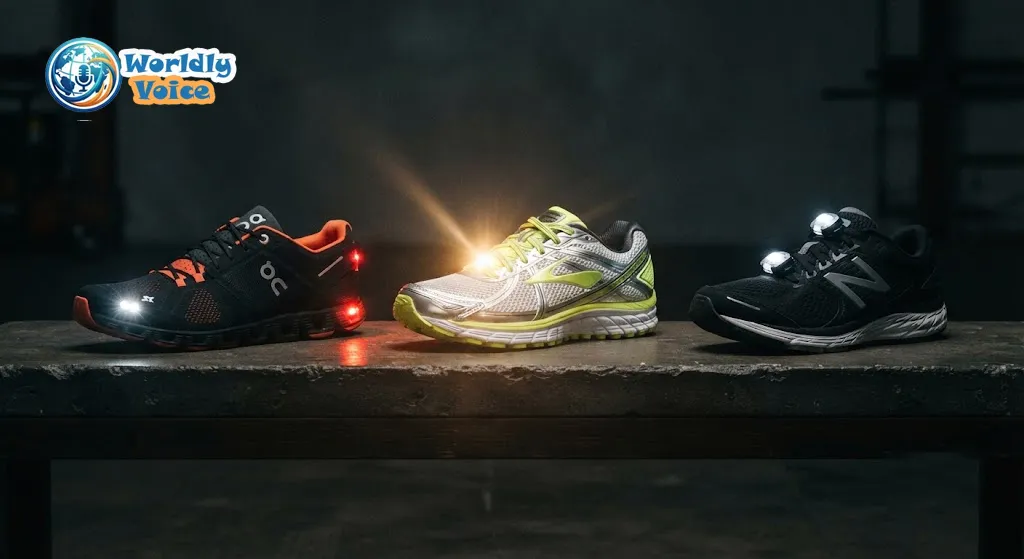
7. Choosing the Right Setup for Your Route
Roads and pavements
A reflective daily trainer paired with Night Runner 270 offers a balanced combination. The shoe provides normal running performance, while the LEDs add front, rear, and side visibility.
Early-morning walking
High Beam Women’s Night Runner shoes may be convenient for short walks, dog walking, or routine exercise because the lights are always attached.
Busy urban areas
Reflective shoes, upper-body reflective material, and a flashing rear light are more useful than relying on shoe lights alone. Drivers need to recognise a human shape, not just two moving points near the ground.
Completely dark paths
Use a primary headlamp or chest light of suitable brightness. Shoe-mounted lights can supplement the beam but should not be the only navigation source.
Technical trails
A stable head-level beam is usually more reliable for reading roots, rocks, dips, and elevation changes. Add reflective details and a rear safety light when other trail users may approach from behind.
Gym and indoor exercise
Built-in LEDs offer little practical benefit indoors. Prioritise fit, ventilation, traction, and training support unless the shoe is being purchased mainly for style.
8. Night-Running Safety Beyond Footwear
No LED shoe can make nighttime running completely safe. Visibility equipment reduces risk, but it does not control traffic, road conditions, animals, or the behaviour of other people.
Before leaving, I recommend:
- Scouting unfamiliar routes during daylight
- Choosing populated and familiar areas
- Sharing the intended route and return time
- Carrying identification and a charged phone
- Running against traffic where local rules permit
- Keeping music low enough to hear approaching vehicles
- Checking the light’s charge before every session
- Combining front, rear, and reflective visibility
- Avoiding the assumption that a driver has seen you
Reflective material on the feet is useful, but upper-body visibility usually creates a larger and more recognisable target. A reflective vest or jacket helps motorists identify the wearer as a person from farther away.
This is why reflective workout gear for women should be considered part of the setup rather than an optional fashion accessory.
9. Frequently Asked Questions
Are LED light-up sneakers suitable for real running?
Some specialised models may support light jogging, but many marketplace light-up sneakers are made mainly for fashion. Check cushioning, traction, heel security, upper support, and fit before treating any illuminated sneaker as performance footwear.
Is Night Runner 270 better than an LED running shoe?
It is usually more flexible. Night Runner 270 shoe lights allow women to keep using a shoe already matched to their feet. An integrated shoe is more convenient but limits the runner to one footwear platform.
Can shoe-mounted lights replace a headlamp?
They may work for illuminated roads and familiar pavements. For unlit or technical trails, a stronger headlamp provides a steadier, higher beam. REI recommends at least 200 lumens for a primary runner’s light.
Are reflective shoes safer than illuminated shoes?
Neither is automatically safer in every situation. Reflective shoes depend on external light, while illuminated shoes create their own light. Combining both technologies provides broader visibility.
Do shoe lights feel heavy?
Well-designed units are intended to feel lightweight, but comfort depends on attachment, lace tension, shoe construction, and running style. Test them during a short walk before a long workout.
Is footwear technology mainly a fashion decision?
No. Although articles such as What Is a Plain Jane Watch may focus partly on design and personal style, night-running footwear must first satisfy fit, stability, traction, and visibility requirements.
10. Final Verdict
The Best LED Light Running Shoes for Women depend on what the runner already owns and where she plans to train.
Women who want a complete shoe with front and rear lighting should consider High Beam Women’s Night Runner shoes. The integrated system is convenient for walking, jogging, and routine road exercise, but fit and comfort should still be tested carefully.
Women who already have comfortable performance shoes will usually gain more flexibility from Night Runner 270 shoe lights. They provide forward illumination, rear red visibility, and the freedom to move the units between different pairs.
Women who prioritise cushioning, stability, width, or distance performance should select a reflective running shoe first. ASICS LITE-SHOW models and the HOKA Bondi 9 are examples of performance-oriented footwear with reflective details, although they do not generate their own light.
My strongest overall recommendation is:
A properly fitted reflective running shoe + rechargeable shoe-mounted lights + upper-body reflective coverage
That combination provides comfort, active illumination, rear visibility, and passive reflectivity without forcing a serious runner to depend on fashion-oriented LED sneakers.
Before buying, identify the darkest section of your normal route. Then choose equipment for that section—not for the best-lit part of the run.
Trusted References
- hands-free running headlamps for shoes and other independently assessed running-light formats from Runner’s World
