


Mount Everest is often photographed as a symbol of achievement: a brilliant white summit rising above the Himalayas, drawing climbers from around the world. But Rainbow Valley Everest tells a much darker story. High on the mountain, above 8,000 meters, the landscape becomes a place where cold, oxygen deprivation, exhaustion, and sudden weather can turn a successful expedition into a fight for survival.
In researching current reports about Everest, I found one detail especially striking: the mountain’s most famous bodies are not simply historical curiosities. Some remain frozen into the terrain decades after their deaths, while difficult recovery missions continue to test what is physically and ethically possible.
The story of Rainbow Valley is therefore not really about death alone. It is about human ambition, changing climbing technology, commercial expeditions, difficult decisions, and the limits of rescue at extreme altitude.
1. Where Is Rainbow Valley Everest?
The question where is Rainbow Valley Everest located is slightly more complicated than many online descriptions suggest.
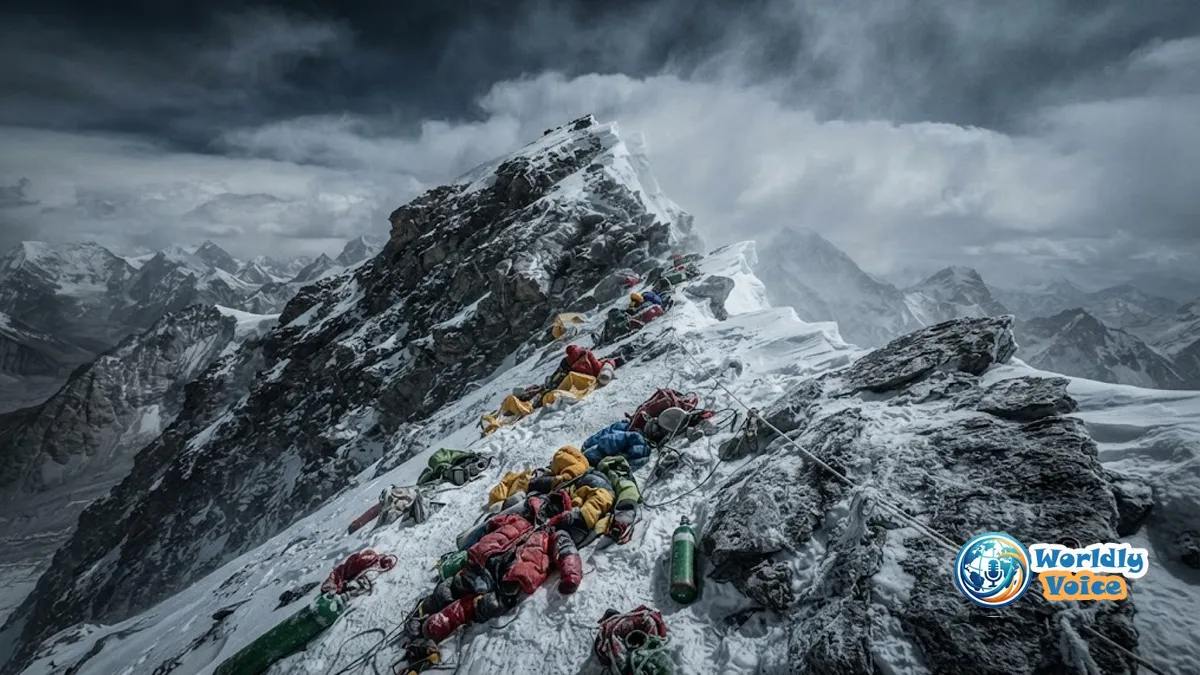
“Rainbow Valley” is not a formally defined geographic feature with universally agreed boundaries. The name is commonly used by climbers and media to describe a high section of Everest’s northeast side, above 8,000 meters and near the route toward the summit. It became associated with the brightly colored clothing and equipment of climbers who died there and whose remains were historically visible against the snow and rock.
One of the best-known examples was the body known as “Green Boots.”
For years, Green Boots was widely reported as Tsewang Paljor, an Indian climber who died during the 1996 disaster. However, current reporting in 2026 has changed that long-standing identification. Indian authorities now identify the remains as Dorje Morup, another member of the same Indo-Tibetan Border Police expedition. A recovery mission is being planned to bring his remains down from Everest.
That update matters because it reminds us that Everest’s stories can evolve even decades later.
Why the name “Rainbow Valley”?
The nickname comes from the vivid colors associated with mountaineering equipment and clothing. Bright red, blue, green, yellow, and orange fabrics can stand out dramatically against white snow and dark rock.
But calling the area colorful can hide the human tragedy behind the phrase.
These were climbers, guides, workers, parents, friends, and family members. Their clothing became visible long after their lives had ended.
That is why I think the term should be used carefully. It may be memorable for search engines and climbing literature, but the people represented by those colors deserve to remain more than landmarks.
2. The Everest Death Zone 8000 Meters: Why the Mountain Changes
The Everest Death Zone 8000 meters is one of the most important concepts for understanding high-altitude climbing.
Above approximately 8,000 meters (26,247 feet), atmospheric pressure is dramatically lower than at sea level. The air still contains roughly 21% oxygen, but each breath delivers far less oxygen to the body because the surrounding pressure is so low.
In simple terms: the oxygen percentage has not disappeared. The amount of usable oxygen entering your bloodstream has become severely limited.
The CDC explains that increasing altitude reduces the partial pressure of oxygen and that hypoxia is the major physiological threat at high elevation. Serious altitude illnesses include high-altitude cerebral edema (HACE) and high-altitude pulmonary edema (HAPE).
At Everest’s highest elevations, climbers can experience:
- Severe fatigue and weakness
- Confusion and impaired judgment
- Loss of coordination
- Hypothermia and frostbite
- HACE, involving brain swelling
- HAPE, involving fluid accumulation in the lungs
- Dehydration and exhaustion
- Oxygen deprivation
- Sudden deterioration during descent
The key point is that acclimatization has limits.
The human body can adapt considerably to moderate altitude, but the summit environment remains profoundly hostile. Supplemental oxygen can improve a climber’s physiological margin, but it does not make the Death Zone safe.
A simple way to understand it
Imagine your body as a machine running on fuel.
At sea level, the supply system works relatively well. At 8,000 meters, the supply line is severely restricted. You can keep moving, but every physical task becomes more expensive.
Walking becomes work.
Thinking clearly becomes harder.
Stopping for too long can become dangerous.
That is why the summit push is not simply a test of strength. It is a race against physiology, weather, time, and diminishing reserves.
Everest Death Zone 8000 meters
3. Mount Everest Climbing History and Tragedies
The Mount Everest climbing history and tragedies cannot be separated from the mountain’s remarkable achievements.
British expeditions explored Everest in the early 20th century. George Mallory and Sandy Irvine disappeared during the 1924 expedition, leaving one of mountaineering’s greatest unanswered questions: did they reach the summit before they died?
Mallory’s body was eventually discovered in 1999. In 2024, a National Geographic expedition found a boot and foot believed to belong to Sandy Irvine, adding another chapter to the century-old mystery.
Then came the defining achievement of 1953.
On May 29, Edmund Hillary of New Zealand and Tenzing Norgay, a Sherpa climber, became the first confirmed climbers to reach Everest’s summit and return alive. The Royal Scottish Geographical Society records the ascent as the successful culmination of the 1953 British expedition led by John Hunt.
From there, Everest gradually changed.
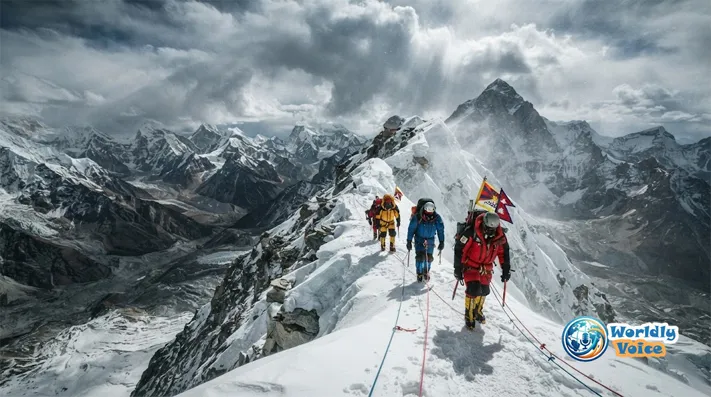
Improved equipment, weather forecasting, fixed ropes, supplemental oxygen, helicopters at lower elevations, and professional guiding made the mountain more accessible. Commercial mountaineering expanded significantly.
But accessibility did not remove the fundamental dangers.
The 1996 disaster
May 10, 1996 remains one of Everest’s most notorious dates.
A severe storm struck climbers near the summit during a period of heavy expedition traffic. Eight climbers died during the disaster, while the broader 1996 season recorded additional deaths. The tragedy became a landmark discussion about weather forecasting, commercial guiding, crowding, turnaround decisions, leadership, and the limits of human judgment under extreme stress.
The lesson was uncomfortable.
Even experienced climbers can become trapped when several relatively manageable problems occur simultaneously.
A delayed departure.
A crowded route.
A slow climber.
A deteriorating storm.
Low oxygen.
A missed turnaround time.
Individually, each problem might be survivable. Together, they can become catastrophic.
Mount Everest climbing history and tragedies
4. Why Dead Bodies Are Left on Everest
One of the hardest questions people ask is simple: Why dead bodies are left on Everest.
The answer is equally difficult.
Recovering a body from the Death Zone can place living climbers in extreme danger. A recovery team may have to work on steep terrain, fixed ropes, exposed ridges, ice, rock, crevasses, and unstable snow while breathing supplemental oxygen.
The body itself may be frozen into the mountain.
It may be buried under snow or ice.
And carrying a person downhill at extreme altitude requires enormous physical effort.
Recent reporting illustrates the scale of the problem. A 2024 recovery operation led by the Nepali Army recovered several bodies, with officials estimating that individual recoveries could cost tens of thousands of dollars.
This is why the decision is rarely as simple as “someone should bring them down.”
A recovery operation creates a difficult ethical calculation:
How much risk should living rescuers accept to recover someone who has already died?
There is no universally easy answer.
Some families strongly want remains returned home. Others may accept that the mountain has become the climber’s final resting place. Cultural and religious considerations can also influence the decision.
The physical environment matters too. Helicopters cannot simply fly to the summit and lift bodies away. At extreme altitude, aviation capability is severely constrained, and technical terrain may require teams to manually free, secure, and lower remains.
Green Boots and the changing story
The Green Boots case demonstrates how recovery decisions can change over time.
For decades, the body became a grim reference point for climbers using the northeast route. Now, according to current 2026 reporting, Indian authorities are preparing a specialist recovery operation after identifying the remains as Dorje Morup.
The planned mission is a reminder that leaving a body behind does not necessarily mean abandoning the person forever.
Sometimes circumstances, resources, permissions, technology, and family wishes change.
5. The Human Cost Behind the Everest Death Zone Fatalities
Discussions about Everest Death Zone fatalities can easily become statistics.
But statistics cannot explain what happens to a human body at 8,500 meters.
A climber suffering severe hypoxia may become confused. Someone experiencing HACE can lose coordination and judgment. A person weakened by exhaustion may simply sit down, believing they can rest before continuing.
That is one reason altitude illness is so dangerous.
The CDC advises that worsening altitude-illness symptoms require descent and emphasizes that severe HACE and HAPE can become life-threatening emergencies.
There is also a psychological dimension.
At extreme altitude, the instinct to help another climber can conflict with the knowledge that stopping may endanger the rescuer too.
This is where the risks faced by Sherpa guides Everest risks become especially important.
Sherpa climbers and high-altitude workers frequently perform route preparation, rope fixing, load carrying, rescue support, and other essential work. Their experience and physical ability are extraordinary, but experience does not make them immune to avalanches, falls, altitude illness, or extreme weather.
In my review of Everest’s history, one pattern stands out: the mountain’s risks are shared unevenly, but its consequences are human for everyone.
6. Mount Everest Summit Risks and Challenges Today
Modern climbers have better technology than the pioneers of the 1920s and 1950s. Yet Mount Everest summit risks and challenges remain substantial.
The mountain is still exposed to:
- Sudden storms
- High winds
- Extreme cold
- Avalanches
- Icefall collapse
- Rockfall
- Crevasses
- Frostbite
- Hypoxia
- Altitude illness
- Exhaustion
- Falls
- Traffic and delays on fixed ropes
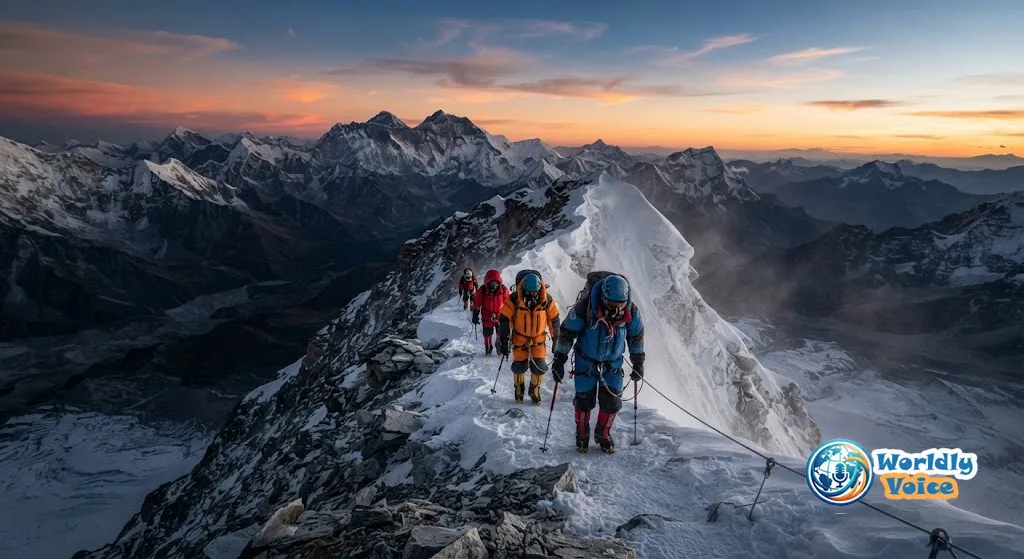
Commercial mountaineering has added another variable: congestion.
When many climbers attempt the summit during a narrow weather window, delays can develop at technically difficult sections. At 8,000-plus meters, waiting is not harmless.
A climber standing still is still consuming oxygen and energy.
The turnaround decision
Experienced expeditions emphasize turnaround times because reaching the summit is only half the journey.
A climber who reaches the top too late may face darkness, worsening winds, depleted oxygen, and severe fatigue during the descent.
That creates an important distinction between summit success and climbing survival.
A successful expedition is not merely one where somebody touches the highest point.
It is one where everyone who reasonably can returns safely.
Current Everest statistics also show why percentages should be interpreted carefully. Through the end of 2025, Alan Arnette’s compilation reported 13,737 total summits and 339 deaths across Everest’s history, with a reported overall summit success rate of about 43%. Those figures include different types of climbers and repeat ascents, so they should not be interpreted as the personal survival probability for a first-time climber.
| Everest factor | Why it matters |
|---|---|
| Altitude above 8,000 m | Severe hypoxia and limited physiological reserve |
| Supplemental oxygen | Can improve oxygen availability but does not eliminate risk |
| Weather | Storms can rapidly reduce visibility and temperature |
| Crowding | Delays increase exposure and oxygen consumption |
| Exhaustion | Weakens judgment, coordination, and movement |
| Descent | Fatigue and late turnaround decisions can make descent dangerous |
| Rescue | Recovery becomes exceptionally difficult at extreme altitude |
For anyone planning an expedition, the practical lesson is straightforward: preparation, acclimatization, weather assessment, experienced leadership, conservative decision-making, and a willingness to turn around are more valuable than summit ambition alone.
For broader outdoor planning, readers interested in adventure travel can also explore Travel Guides and Canopy Tour vs Zipline when comparing different types of outdoor experiences.
7. Rainbow Valley Everest Is a Warning, Not an Attraction
The enduring fascination with Rainbow Valley Everest comes from its strange combination of beauty and tragedy.
The Himalayas can look almost unreal from a distance. Up close, the environment is unforgiving.
The bodies associated with the area became visible reminders of this reality. Green Boots was perhaps the most famous. Other climbers, including Francys Arsentiev and David Sharp, became part of Everest’s difficult history and the continuing debate about responsibility, rescue, and human limits.
But we should resist turning these people into macabre tourist attractions.
The better lesson is one of humility.
Every expedition plan contains decisions that may seem small at sea level but become life-or-death choices at altitude. When to turn around. Whether to continue. Whether someone needs assistance. Whether weather conditions are changing too quickly.
The mountain does not reward stubbornness.
It rewards preparation and judgment.
FAQs About Rainbow Valley Everest
Is Rainbow Valley an official location on Mount Everest?
Not in the same sense as established geographical features such as the South Col or Khumbu Icefall. “Rainbow Valley” is a commonly used descriptive term for a high area associated with bodies and colorful climbing equipment, particularly on Everest’s northeast side.
What is the Green Boots Everest location?
Green Boots was historically associated with a rocky alcove on Everest’s northeast route at roughly 8,500 meters. Current 2026 reporting identifies the remains as Dorje Morup rather than the previously assumed Tsewang Paljor. Indian authorities are pursuing a recovery mission.
Why are bodies not immediately removed from Everest?
Extreme altitude, technical terrain, freezing conditions, weather, cost, and the danger to rescuers make recovery exceptionally difficult. In some situations, attempting to retrieve a body could put multiple living people at serious risk.
Does everyone who climbs Everest enter the Death Zone?
Summit climbers generally must spend time above 8,000 meters during the summit push, but exposure varies by route, itinerary, weather, oxygen strategy, and individual circumstances. The region is considered physiologically extreme because oxygen availability is dramatically reduced.
What are the biggest climbing Everest altitude sickness risks?
Acute mountain sickness can progress to serious conditions including HACE and HAPE. Severe confusion, loss of coordination, extreme weakness, breathing difficulty, or worsening symptoms require urgent action and, when appropriate, descent.
Has Everest become safer despite more climbers?
Some aspects of climbing have improved through better forecasting, equipment, communications, route management, and professional support. However, the mountain itself has not become less extreme. More climbers can also create congestion and logistical challenges during short summit windows.
Conclusion: What Rainbow Valley Really Teaches Us
Rainbow Valley Everest is ultimately a story about limits.
It shows what happens when human ambition meets an environment where the body has almost no margin for error. The bright colors that inspired the area’s grim nickname are not simply pieces of equipment on a mountain. They represent people whose journeys ended there.
Everest’s history includes extraordinary achievements by Hillary, Tenzing, Junko Tabei, Reinhold Messner, countless Sherpa climbers, and generations of expedition teams. It also includes storms, avalanches, altitude illness, falls, exhaustion, and difficult ethical decisions.
The latest Green Boots recovery effort adds another reminder that Everest’s history is still being written.
If there is one lesson I would take from the mountain’s story, it is this: reaching the summit should never be considered more important than returning safely.
For readers researching extreme outdoor destinations, the most useful approach is not to romanticize the Death Zone. Understand the altitude. Respect the weather. Learn how rescue limitations affect decision-making. And remember the people behind the statistics.
Trusted references:
High-Altitude Travel and Altitude Illness
Mount Everest
The Daring Gamble to Bring Everest’s Most Famous Body Home
