


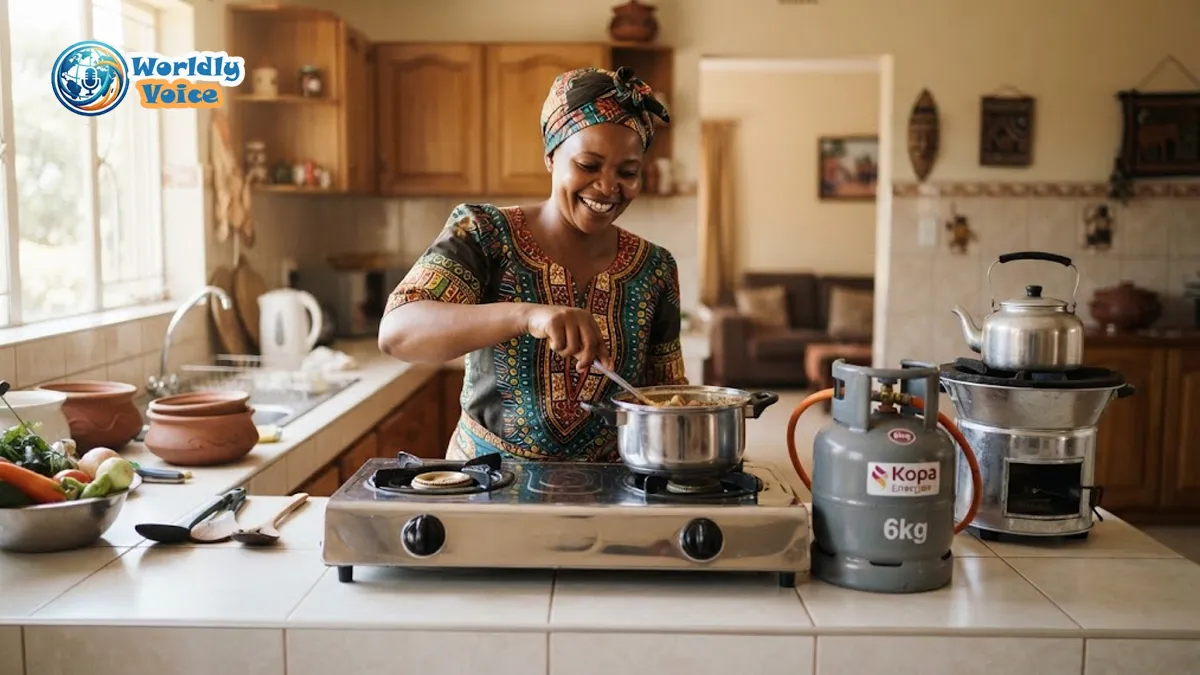
If you are trying to understand zambia government incentives for lpg and cookstoves, the short answer is this: Zambia is moving away from broad fuel subsidies and toward policy support, tax discussions, private financing, safety regulation, and climate-linked funding. In my experience reviewing clean energy policy across African markets, that shift matters. It changes how households, investors, distributors, and development partners should think about affordability.
This is not only an energy story. It is a health story, a forest story, and a household budget story.
Across Zambia, many families still cook with charcoal, firewood, or traditional mbaula stoves. The result is familiar: smoke-filled kitchens, rising fuel costs, and mounting pressure on forests. Most studies agree that clean cooking access is one of the fastest ways to reduce indoor air pollution and support a more sustainable household energy transition Zambia needs.
What I have noticed is that many people expect government help to appear mainly as direct price cuts. That is not really how the current system works. Today, the stronger trend is a mix of regulation, enabling policy, private-sector financing, carbon-backed projects, and selective fiscal advocacy. That broader picture is what this guide explains.
I will break down the current landscape, what support actually exists, where the gaps remain, and what households and businesses should watch next.
1. Why clean cooking has become a national priority in Zambia
Zambia’s clean cooking challenge is large. A significant share of households still rely on traditional biomass. That includes firewood and charcoal. The consequences stretch well beyond the kitchen.
Here is why the issue has become urgent:
- Forest loss continues at an alarming pace.
- Indoor air pollution contributes to serious health risks.
- Charcoal dependence puts pressure on household spending.
- Women and children often carry the heaviest burden through fuel collection and smoke exposure.
- Zambia’s climate commitments now push energy policy toward lower-emission solutions.
In practical terms, clean cooking sits at the intersection of development and survival. I have seen this pattern in many energy-transition conversations: households do not simply switch fuels because they are told to. They switch when the new option is safer, affordable, available, and easy to trust.
That is why zambia clean cooking policy and incentives matter. Policy creates the rules. Finance lowers the barrier. Distribution brings products closer to homes. Trust turns interest into adoption.
There is also a wider lesson here. Energy transitions are rarely one-size-fits-all. Urban households may prefer LPG or electric cooking. Rural households may move first to improved biomass and gas cookstoves before adopting fully modern solutions.
As a side note, the way place and infrastructure shape household choices reminds me of how geography changes travel decisions in Where Is Belize Located. Context matters. In energy, just as in travel, location changes what is realistic.
2. The policy backbone: what Zambia is trying to achieve
The current policy environment is guided by several national frameworks. Together, they form the strategic basis for government support for lpg gas and stoves in Zambia.
Vision 2030 and the 8th National Development Plan
These frameworks support sustainable growth, environmental protection, and improved quality of life. Clean cooking fits neatly into all three goals. Reduced charcoal use helps forests. Cleaner kitchens help public health. Better fuels improve daily living standards.
Zambia National Energy Policy
The Zambia National Energy Policy supports diversification of energy sources and wider access to modern energy. In clean cooking discussions, that usually means growing the role of LPG, electricity, and other cleaner alternatives.
Nationally Determined Contributions under the Paris Agreement
Zambia’s climate commitments reinforce the push toward lower-emission household energy systems. Clean cooking is increasingly seen as a climate action lever, not just a welfare issue.
National Clean Cooking Strategy and Action Plan
This is one of the most important pieces of the puzzle. It aims to coordinate action, reduce fragmented interventions, and create a roadmap for scaling adoption. In my experience, strategies like this do not solve the market overnight. But they matter because they align government agencies, donors, and private players around common targets.
3. Are there direct LPG and cookstove subsidies in Zambia?
This is the question most people ask first.
The honest answer: broad, universal, state-funded retail subsidies are limited. Zambia has moved away from the kind of sweeping fuel support that once distorted prices and strained public finances. That is why discussions around lpg and cookstove subsidies zambia need nuance.
Historically, large subsidies often created three problems:
- They were expensive for the state.
- They frequently benefited higher-income users more than poorer households.
- They discouraged more targeted support systems.
So, if you are looking for a simple nationwide discount on every LPG cylinder or stove, that is generally not the current model.
What exists instead is a more layered support structure:
- Policy support
- Regulatory oversight
- Public-private partnerships
- Product financing
- Pilot programs
- Carbon-funded affordability support
- Tax and duty advocacy for clean energy equipment
That can feel less visible than a direct subsidy. But in some cases, it is more sustainable.
4. What support households actually see on the ground
For many families, the most tangible help comes from financing models rather than subsidies.
Pay-as-you-go and installment plans
The rise of Pay-As-You-Go (PAYG) clean cooking finance has changed the conversation. Instead of paying the full cost of an LPG kit upfront, households can spread payments over time.
This often includes:
- Stove package financing
- Cylinder deposit support
- Metered LPG use
- Mobile-money repayment systems
- Lease-to-own models
I have found that this is often the turning point for adoption. Not because LPG is always cheaper in absolute terms, but because the entry cost becomes manageable.
Private-sector programs
Companies and distributors sometimes run asset-financing programs or promotional bundles to grow the market. These may include starter kits, reduced initial equipment costs, or refill-linked payment plans.
Development partner interventions
Some donor-backed or NGO-supported projects help de-risk access for low-income households or target underserved communities with awareness campaigns, pilot deployment, or co-financing.
So when people talk about zambia government incentives for lpg and cookstoves, the reality is often indirect: government creates the enabling conditions, while private firms and partners deliver practical affordability tools.
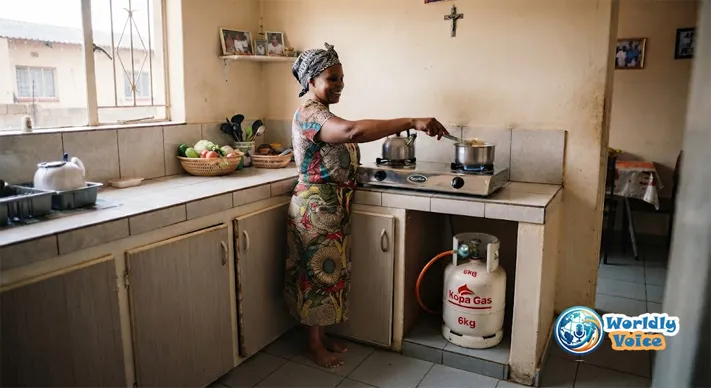
5. Tax relief, customs, and fiscal incentives: where the real policy debate sits
One of the most important parts of this story is zambia renewable energy and clean cooking tax relief.
While direct subsidies are limited, tax policy can dramatically shape affordability. If import duties, VAT, or customs charges remain high on clean cooking equipment, the final retail price rises. That slows adoption.
What stakeholders usually advocate for
Across the clean cooking sector, common policy asks include:
- Reduced import duties on LPG equipment
- Lower taxes on clean cookstoves
- Preferential treatment for efficient electric cooking appliances
- Clearer classification of clean cooking products at customs
- Consistent application of exemptions
This matters because the clean cooking supply chain includes much more than the stove itself. Costs can build up across:
- Burners
- Regulators
- Cylinders
- Valves
- Safety hoses
- Smart meters
- Electric pressure cookers
If Zambia strengthens zambia renewable energy and clean cooking tax relief, the market could become more competitive and products more affordable.
The challenge of inconsistency
In my experience, one of the biggest market frustrations is not always the tax rate alone. It is inconsistency. When exemptions are unclear or unevenly applied, businesses struggle to price products confidently. That uncertainty can be just as damaging as a high tariff.
6. The role of the Energy Regulation Board and safety systems
A clean cooking market cannot grow if consumers do not trust it.
That is where the Energy Regulation Board (ERB) Zambia becomes central. LPG is a modern fuel, but it depends on strong safety systems. Standards, inspections, licensing, and consumer protection all shape confidence.
The Energy Regulation Board (ERB) Zambia helps oversee aspects of energy market regulation, including standards that affect LPG handling and supply conditions. Strong regulation supports:
- Safe storage and transport
- Quality control
- Better distributor compliance
- Consumer confidence
- Reduced accident risk
This is a form of incentive that people do not always recognize. Safety regulation lowers market fear. And fear is a real adoption barrier.
I have seen many households reject LPG not because they dislike it, but because they have heard stories about explosions or poor cylinder handling. Good regulation helps address that.
7. LPG vs electric cooking: Zambia’s dual clean cooking pathway
Zambia’s strategy is not only about LPG. Electricity also matters.
Because Zambia has substantial hydropower in its electricity mix, eCooking is often part of the policy conversation. For urban and peri-urban households with reliable grid access, electric cooking appliances can be a strong alternative.
Why eCooking is gaining attention
- It can reduce dependence on charcoal.
- It aligns with low-carbon development goals.
- Appliances like electric pressure cookers use energy more efficiently.
- It works well for households already connected to the grid.
There is ongoing policy interest in things like:
- Special cooking tariffs
- Demand-side management
- Appliance tax waivers
- Efficient appliance promotion
This broader approach is useful because no single technology will solve the whole challenge. In some homes, LPG is the most practical answer. In others, electricity may win.
That kind of choice-based design matters. It is a bit like comparing experiences in Canopy Tour vs Zipline. Two options can look similar at first, but the right fit depends on the user, the setting, and the outcome they care about.
8. Carbon financing is becoming a serious market driver
One of the most important emerging trends is Carbon financing for clean cooking.
This can work in a fairly simple way. A project developer distributes cleaner stoves or supports LPG adoption. The emissions reductions are then measured against a baseline, such as charcoal or firewood use. If verified, those reductions can generate carbon credits.
Those revenues can then help:
- Lower upfront product costs
- Expand distribution
- Fund awareness campaigns
- Support after-sales service
- Improve affordability for lower-income households
The broader policy context is becoming more relevant here as Zambia develops climate governance and carbon market structures. The more credible and predictable that framework becomes, the easier it is for developers and investors to support scale.
The UNDP Zambia and other international organizations have also highlighted the role of climate-aligned development pathways, including cleaner household energy transitions.
Most studies agree that carbon finance works best when paired with strong monitoring, quality distribution, and real consumer use. A stove distributed is not the same as a stove used. That distinction matters.
9. Market realities: what still holds Zambia back
Even with momentum, the barriers remain real.
Key challenges
- Upfront equipment costs
- Limited rural distribution networks
- Refill accessibility
- Consumer safety concerns
- Inconsistent product quality
- Limited public awareness
- Policy implementation gaps
LPG supply and distribution constraints
Liquefied petroleum gas distribution Zambia still faces structural limitations in some areas. If households cannot easily refill cylinders, adoption stalls. People need reliable local access, not just a one-time starter package.
Charcoal’s entrenched position
Charcoal remains widely used because it is familiar, accessible, and often sold in small, flexible quantities. Clean fuels must compete not just on efficiency, but on cash-flow convenience.
The biomass transition question
Not every household will move directly from firewood to LPG. In some cases, improved biomass and gas cookstoves may coexist during the transition. Policymakers need to acknowledge that reality instead of forcing an unrealistic binary.
This reminds me of product adoption in other sectors. People rarely leap from old to new overnight. They test, compare, and adapt. Even in consumer-lifestyle shifts, like choosing accessories for leisure spaces such as Inflatable Bar for Swimming Pool, convenience and perceived value shape final decisions more than technical arguments alone.
10. Quick comparison: what kind of support exists today?
| Support Area | What It Looks Like in Zambia | Who Benefits Most |
|---|---|---|
| Direct consumer subsidies | Limited broad universal subsidies | Few households directly |
| Policy frameworks | National strategies, climate alignment, energy planning | Entire sector |
| Tax and duty relief | Partial, debated, sometimes inconsistent | Importers, distributors, consumers indirectly |
| Safety regulation | Standards and oversight through ERB and related institutions | Consumers and market operators |
| PAYG financing | Installment-based access to LPG kits and clean stoves | Low- and middle-income households |
| Carbon financing | Projects using emissions reductions to lower costs | Developers and participating households |
| eCooking promotion | Interest in efficient appliances and supportive tariffs | Grid-connected urban households |
11. What households, investors, and suppliers should do next
For households
- Ask about installment or PAYG options before ruling out LPG.
- Compare total cooking costs, not just the upfront stove price.
- Choose certified equipment and safe distributors.
- Watch for pilot projects or bundled offers in your area.
For suppliers
- Build trust through safety education.
- Offer smaller payment plans.
- Improve refill accessibility.
- Use after-sales service as a market advantage.
For policymakers
- Clarify tax treatment for clean cooking equipment.
- Strengthen targeted affordability programs.
- Improve coordination between climate, energy, and health policy.
- Support expansion of reliable LPG distribution networks.
- Keep linking deforestation and clean cooking solutions in public communication.
FAQs
1. Does Zambia offer nationwide LPG price subsidies?
Not in the broad universal form many people expect. Current support is more indirect, through policy, regulation, financing models, and selective fiscal measures.
2. What is the biggest practical incentive for households today?
In many cases, it is Pay-As-You-Go (PAYG) clean cooking finance or installment-based access, which reduces the heavy upfront cost of LPG kits and modern stoves.
3. Is electric cooking part of Zambia’s clean cooking plan?
Yes. Especially in urban areas with grid access, electric cooking is increasingly discussed alongside LPG as part of the wider Household energy transition Zambia needs.
4. How does carbon financing help clean cooking?
It can lower hardware costs by using verified emissions reductions to fund stove and fuel access. That makes Carbon financing for clean cooking an important emerging tool.
5. Which government body is important for LPG regulation?
The Energy Regulation Board (ERB) Zambia is a key institution in the broader regulatory environment affecting LPG standards, safety, and market confidence.
6. Are improved biomass stoves still relevant?
Yes. In some communities, improved biomass and gas cookstoves may both play roles during the transition away from traditional fuels.
Conclusion
The story of zambia government incentives for lpg and cookstoves is more sophisticated than a simple subsidy question. Zambia is building a clean cooking transition through policy alignment, regulatory support, fiscal debate, private financing, and climate-linked funding. That approach is not perfect. Gaps remain. Affordability is still a barrier. Distribution still needs work. But the direction is clear.
In my view, the strongest opportunity lies in combining smart public policy with practical financing. Households need products they can trust, pay for, and refill easily. Businesses need predictable tax treatment and safer market conditions. Policymakers need to keep linking energy access with health, forests, and economic resilience.
If you are a household, ask better questions before assuming clean cooking is out of reach. If you are a business, watch the financing and carbon market space closely. And if you are tracking zambia clean cooking policy and incentives, expect future progress to come less from blanket subsidies and more from smarter market design.
For readers who enjoy understanding how context changes choices, you may also like exploring Where Is Belize Located, Canopy Tour vs Zipline, and Inflatable Bar for Swimming Pool as examples of how practical decisions often depend on environment, use case, and access.
