


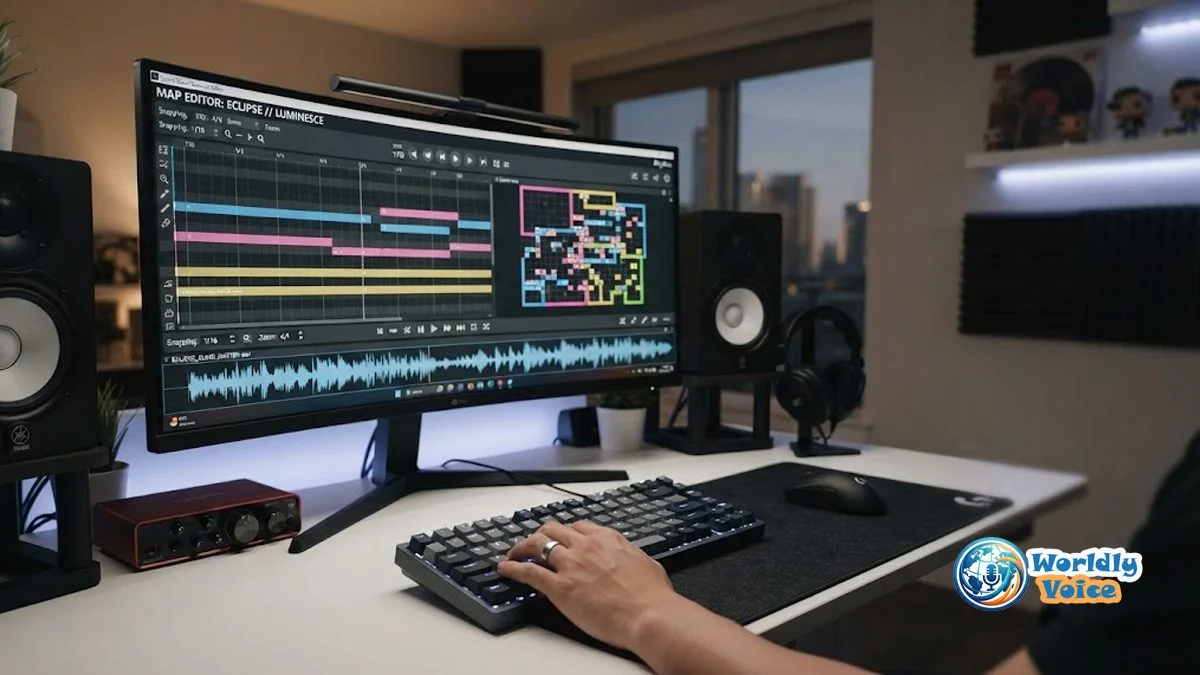
If you’re trying to understand the rhythia map maker, I’d start with one simple fact: the best results come from treating map creation like rhythm design, not just note placement. In Rhythia, custom mapping is built around the Sound Space Quantum Editor (SSQE), and once I learned the timing workflow, the rest became much easier. This guide breaks down how to make custom maps in rhythia, how to install them, and how to avoid the mistakes that usually make a chart feel awkward instead of playable.
I’ve also found that the process is more approachable than it first looks. Most players don’t need advanced theory on day one. They need a stable editor setup, a clean audio file, and a clear sense of how timing and spacing work. That’s what this article covers. Along the way, I’ll also connect a few related topics like Rhythia community levels, Rhythia content manager, and Rhythia rhythm game mapping so the full workflow makes sense.
1. Start with the Right Tool: SSQE
The core of the rhythia map maker workflow is the Sound Space Quantum Editor (SSQE). That matters because the editor is not just a note grid. It is the environment where timing, spacing, and pattern flow all come together.
In my experience, the first step is always the cleanest one: get the editor installed, then make sure you can open a fresh project without errors. The official Rhythia releases page is the safest place to look for the SSQE package. After extraction, the updater executable handles the launch and setup flow.
For context, this is similar to how some tools in rhythm gaming ecosystems, like osu! and A Dance of Fire and Ice (ADOFAI), rely on timing-first workflows. The difference is that Rhythia’s editor leans heavily into spatial planning and quantum-style movement.
A few things I check before mapping:
- Audio file format: use
.mp3or.ogg - Project naming: keep it short and searchable
- Folder organization: separate drafts from finished maps
- Content support: make sure custom map support is enabled before testing imports
If you are also writing related site content, this section pairs well with How to Configure OpenVPN Client Config Dir, because both tutorials benefit from clear setup steps and error avoidance.
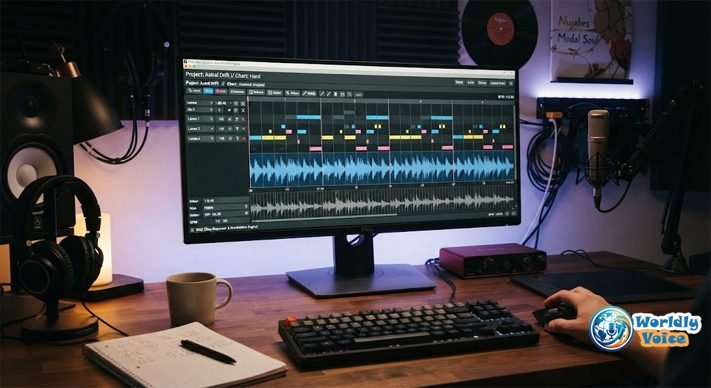
2. Build the Map Around Timing First
Timing is the part most new mappers rush. That is usually where the chart breaks down.
When I work through a rhythia game map creation tutorial process, I always start with the Timing tab. Set the BPM. Set the offset. Then verify the beat lands where the music actually feels accented. If the timing is off, every later decision becomes harder to judge.
SSQE includes tools that help with this. The BPM tapper can get you close, and importing timing points from another rhythm game can save time when the song already exists in a mapped format elsewhere. I’ve seen this work especially well for songs that have strong, repetitive percussion.
A practical timing checklist:
- Load the track.
- Tap or estimate the BPM.
- Set offset against the first clear beat.
- Scrub through the intro and chorus.
- Fix drift before placing meaningful patterns.
This is also where the rhythia level editor guide mindset matters. A level editor is not just a place to insert notes. It is a place to shape player expectation. If the timing breathes naturally, the map feels readable even before it gets difficult.
Most studies on rhythm-game learning agree on one point: players tolerate complexity better when the timing foundation is stable. That principle holds here.
3. Place Notes with Intent, Not Speed
Once timing is set, note placement becomes more creative. The SSQE grid uses key-based lanes, typically laid out in rows such as Q/W/E, A/S/D, and Z/X/C. That gives you a simple mental model for patterns.
When I’m mapping, I try not to think in isolated notes. I think in phrases. A short burst. A diagonal motion. A repeat with variation. That keeps the map from feeling like random input.
A few practical rules help:
- Use the top row for higher motion emphasis
- Use middle lanes for stable rhythm anchors
- Use bottom lanes for release patterns
- Keep repeated patterns readable
- Avoid placing everything at maximum density
The snapping controls matter more than people expect. More snap flexibility means more room for detail, especially when you want a chart that feels intentional rather than rigid. That is also where the Quantum mapping offgrid technique becomes useful. Offgrid placement gives you creative freedom when a song needs a more expressive shape, but I only use it when the pattern really benefits from it. Overuse makes charts harder to read.
A good mental test is simple: if I can’t explain why a note is where it is, I probably shouldn’t leave it there.
4. Use Pattern Language to Shape Difficulty
Rhythia mapping has a language of its own. One of the more useful ideas is the “letter array” style of pattern thinking. For example, a sequence like ZAQWE is not just a string of letters. It is a readable motion path.
That is why Rhythia rhythm game mapping feels more like composition than data entry. You are not only placing beats. You are building hand movement, tension, and release.
In harder sections, I usually look for three things:
- Consistency: does the pattern teach the player something?
- Escalation: does the pattern evolve instead of repeating flatly?
- Recovery: does the player get a moment to reset?
Meganotes and dense clusters should stay physically fair. A common community guideline is to keep note spacing within comfortable reach unless the chart is intentionally high difficulty. If you are creating for a wider audience, clarity usually beats excess.
This is also where Rhythia community levels help. Community charts give you a reference point for what players expect at different difficulty bands. I often compare my draft against a few existing maps before finalizing anything.
5. Download and Install Custom Maps the Right Way
For players who want to download rhythia custom songs and maps, the process is straightforward once custom map support is turned on.
Typical flow:
- Enable custom content in game settings.
- Open the Rhythia content manager.
- Import the
.ssmpfile. - Confirm the map appears in your library.
- Launch it and verify audio, timing, and note behavior.
SSMP map files are the standard format I look for when collecting maps from the community. They are usually shared through official channels, creator hubs, or community spaces connected to the game. When you’re browsing for a Rhythia custom songs download, I recommend checking whether the file is current and whether the mapper included notes about timing or compatibility.
Here is a quick comparison table I use when reviewing a custom map package:
| Item | What I check | Why it matters |
|---|---|---|
| Audio file | .mp3 or .ogg quality | Affects timing clarity |
| Map file | .ssmp format | Required for import |
| Timing notes | BPM / offset details | Prevents drift |
| Difficulty label | Beginner / Advanced / Expert | Sets player expectations |
| Source | Creator or community hub | Helps with trust and updates |
This part of the workflow is where a lot of users also search for support topics like Does Instagram Notify When You Screenshot a Post or Error Code 211 Marvel Rivals on the same site. Those are different subjects, but the structure of a reliable how-to article is similar: clear steps, clear terminology, no guesswork.
6. Learn From Community Feedback
If you want better maps, you need a feedback loop. That is the part many guides skip.
The Rhythia Discord Server and the Sound Space Quantum Editor Server are important because they function as living reference points. Mappers share drafts, discuss pattern choices, and troubleshoot timing issues there. I’ve seen simple changes from community feedback turn an awkward chart into a much smoother one.
What I look for in feedback:
- Does the timing feel locked?
- Are the patterns readable at normal speed?
- Does the difficulty curve make sense?
- Are any transitions unfair or cramped?
- Is there anything that feels visually noisy?
That kind of review is especially useful if you are building maps for public release rather than personal use. It also helps align your work with the broader Rhythia level editor guide culture, where clarity and playability matter as much as creativity.
7. Common Mistakes to Avoid
I see the same problems over and over in early map drafts.
- Timing the intro too loosely
- Adding offgrid notes too early
- Overusing dense patterns
- Ignoring player hand flow
- Forgetting to test the full song
- Importing a file without checking support settings
The easiest fix is discipline. Map the song in stages. Test after each major section. Then trim anything that looks clever but plays badly. That approach saves time and produces cleaner results.
For readers building out site relevance, this section also supports how to make custom maps in rhythia as a long-tail keyword phrase that fits naturally inside real guidance rather than sounding forced.
FAQ
How do I start using the Rhythia map maker?
Install SSQE, load an audio file, set timing first, then begin placing notes on the grid.
What file type do Rhythia maps use?
Custom maps are typically shared as .ssmp files.
Can I import timing from other rhythm games?
Yes, SSQE supports timing workflows that can help when adapting a song from another game.
Where do I find custom maps?
Use community hubs, official releases, or trusted creator channels when you download rhythia custom songs and maps.
What is the best way to improve my charts?
Test often, ask for feedback, and compare your work to established Rhythia community levels.
Is the Rhythia content manager required for installs?
It is the easiest way to import and organize custom maps once content support is enabled.
Conclusion
The rhythia map maker is easier to master once you treat it as a rhythm design tool instead of a simple editor. Start with timing. Build patterns with purpose. Use offgrid ideas carefully. Then test, revise, and learn from the community. That is the practical path I’d recommend whether you are making your first chart or polishing a more advanced map.
If you follow that process, how to make custom maps in rhythia becomes a repeatable workflow, not a one-time experiment. And once you’re comfortable with SSQE, Rhythia rhythm game mapping starts to feel less like setup work and more like creative editing.
References
